Essentialism vs Deep Work
Which should you read?
The Quick Answer
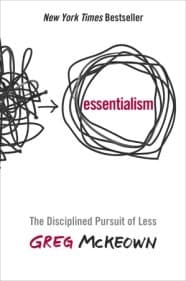
Read Essentialism if you’re overwhelmed by commitments and need a decision filter to pick the vital few and say no to the rest. essentialism is best when your bottleneck is priorities and boundaries.
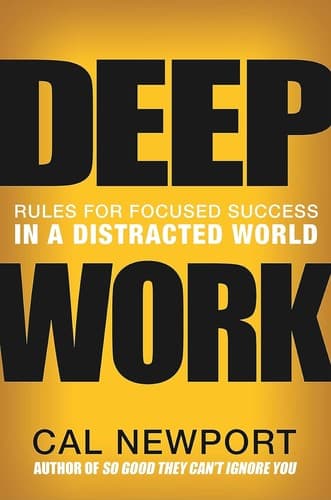
Read Deep Work if you need a repeatable system to protect focus and produce high-value output despite distractions. deep work is best when you already know what matters and your bottleneck is attention.
Read Essentialism first to reduce your commitments, then Deep Work to execute the remaining priorities at a higher level with protected focus blocks.
At a Glance
The Vibe — Compared
Who Should Read Which?
Essentialism
- •You’re overwhelmed because you’re overcommitted—and you need permission + method to say no.
- •You feel busy but not effective; your weeks are dominated by other people’s priorities.
- •You need a decision filter to pick the vital few and eliminate/renegotiate the trivial many.
- •You want systems for boundaries, tradeoffs, and designing a simpler life.
Deep Work
- •You already know what matters, but you keep getting pulled into email/Slack/scrolling.
- •You need to ship cognitively demanding work (code, writing, studying) and want a repeatable focus system.
- •You want concrete practices: time-blocking, rituals, and environment design for concentration.
- •You want to make ‘deep output’ your competitive advantage.
What the Crowd Says — Head to Head
“Deep Work is the ‘how’ once you’ve decided what matters; Essentialism is the ‘what’ and ‘why’—cut the list first, then go deep on what remains.”
r/productivity“Essentialism helps you stop saying yes; Deep Work helps you stop doing the remaining yeses in a distracted, fragmented way.”
r/nonfictionbookclub“If your calendar is chaos, no amount of ‘deep work’ will save you—fix commitments first (Essentialism), then protect focus (Deep Work).”
r/productivity“Both made life simpler for me: Essentialism reduced the number of projects; Deep Work increased the quality of the work I kept.”
r/nonfictionbookclubWhere They Overlap
- Both are anti-busyness: they argue that ‘looking productive’ is not the same as producing value.
- Both emphasize deliberate design: you don’t ‘find time/focus’—you create conditions for it.
- Both require saying no (Deep Work: to distractions; Essentialism: to commitments).
Where They Diverge
- Deep Work optimizes execution quality (focus) once a goal is chosen; Essentialism optimizes selection (priorities) before execution.
- Deep Work is more about attention, rituals, and training concentration; Essentialism is more about boundaries, tradeoffs, and decision filters.
- Deep Work tends to be individual craft-oriented; Essentialism is often about social/organizational commitments.
Still Can't Decide?
Your bottleneck → You can focus, but you keep committing to the wrong things.
Your calendar reality → Your week is dominated by meetings/requests; you need renegotiation more than techniques.
What you want immediately → A rule for saying no and cutting 20–50% of commitments.