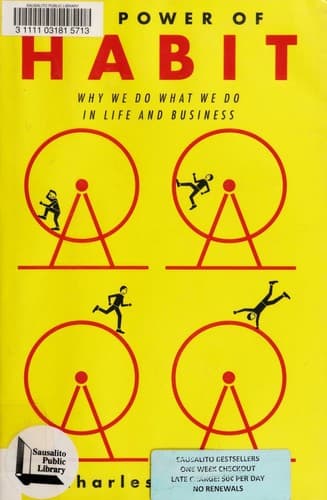
A foundational explainer of how habits work (cue → routine → reward) that many readers still cite years later—though some wish it were tighter and more directly actionable.
Why It's Popular Right Now
The Power of Habit broke out because it gave mainstream language to something people already felt: ‘I do this on autopilot.’ The habit loop model (cue → routine → reward) and the substitution-based ‘golden rule’ are easy to remember, easy to share, and immediately applicable across health, productivity, and business.
Contents
Core Concepts
Habits run as loops: cues trigger routines that produce rewards, and cravings lock the loop in. Lasting change usually comes from keeping the cue and reward the same while swapping in a new routine—and from targeting ‘keystone’ habits that create a ripple effect.
The Habit Loop
Cue → routine → reward: the basic cycle behind automatic behavior.
Cravings Drive Habits
The brain learns to anticipate the reward; that anticipation (craving) makes the routine feel necessary.
The Golden Rule (Replace, Don’t Erase)
Keep the cue and reward; insert a new routine that satisfies the same craving.
Keystone Habits
Some habits act like first dominoes—changing them triggers multiple other changes.
Organizational Habits
Groups and companies also run on routines; changing ‘who does what when’ can reshape outcomes.
The Reading Experience
Case-study narrative reads well in audio, but highlighting the loop and your own cues/rewards is easiest in print.
The Honest Take
Curated from 4.9K+ community discussions
Read If
- •You want to understand why you do what you do before you try to optimize it.
- •You like learning through real-world stories (companies, athletes, individuals) rather than worksheets.
- •You keep failing at willpower-based change and want a mechanics-first model.
- •You’re building a habit system from scratch and need a foundational mental model.
Skip If
- •You want a tight playbook with step-by-step exercises and trackers.
- •You’ve already internalized habit basics and want newer/less anecdotal material.
- •You get impatient with long case studies before the framework is fully spelled out.
- •You’re looking for domain-specific tactics (fitness, money, focus) rather than a general habit model.
What Works
Clear mental model (cue–routine–reward)
r/r/BettermentBookClub 4“I think the practical part of TPOH can be distilled into a single sentence… Since you can't remove the cue, improve the routine, and still get the reward.”
Keystone habit framing
r/r/stopdrinking 53“Drinking is a keystone habit because it also makes you eat more, spend more, waste more time, read less, get worse sleep, and a whole bunch of other things.”
Feels high-value even if long
r/r/selfimprovement 3“I can't vouch for Smarter, Faster, Better, but "The Power of Habit" goes down in my top ten books of all time just through the sheer value it provides. The only issue with the book is its length but its definitely worth a read.”
What Falls Flat
Overwritten / too long
r/r/selfimprovement 1“I certainly agree it is over written. I liked the anecdotes about how habits can change things…”
Some readers want clearer applications
r/r/selfimprovement 2“Reading The Power of Habits, but can't find real life applications for it”
Real-Life Impact
“Love this, never heard of this book or concept but I’m definitely going to check it out, so thanks for sharing. And you’re right, my sobriety has literally ushered an entire focus…”
“Nailed it. Nondrinking is a keystone habit for me, 100%. It was the first domino that had to fall, and it led to a cascade.”
“I started with the gym, then eating healthier then realized drinking is holding back my goals at the gym”
“This morning, I got up and went for a walk outside before starting work. I didn’t feel like doing it… But not drinking has literally changed what I do with mornings.”
“We know that a habit cannot be eradicated — it must, instead, be replaced.”
— Charles Duhigg
The Quotes
From the Book
“We know that a habit cannot be eradicated — it must, instead, be replaced.”
“If we keep the same cue and the same reward, a new routine can be inserted.”
“The Golden Rule of Habit Change: You can't extinguish a bad habit, you can only change it.”
“Habits, scientists say, emerge because the brain is constantly looking for ways to save effort.”
From the Crowd
“The Power of Habit is more theory and the science of habit change. Atomic Habits is all about practicality and putting habit changes into place.”
r/r/BettermentBookClub 5“I can't vouch for Smarter, Faster, Better, but "The Power of Habit" goes down in my top ten books of all time just through the sheer value it provides.”
r/r/selfimprovement 3“I certainly agree it is over written. I liked the anecdotes about how habits can change things…”
r/r/selfimprovement 1“Love this, never heard of this book or concept but I’m definitely going to check it out.”
r/r/stopdrinking 18The Crowd Splits: The Debate
While generally beloved, the community is divided on the book's depth and originality.
Is The Power of Habit more useful as a ‘why it works’ explainer than as a practical habit manual?
Is the book tightly written, or does it feel overlong because of the case studies?
The Bookshelf
Read Instead
Atomic Habits
James Clear
“More implementation-heavy: clear tactics, checklists, and environment design.”
Buy on Amazon
Tiny Habits
BJ Fogg
“More behavior-design oriented with tiny starting steps and immediate celebration.”
Buy on Amazon
Better Than Before
Gretchen Rubin
“More personality-style habit strategies and habit tendencies.”
Buy on AmazonRead Next
Deep Work
Cal Newport
“Apply habit thinking to focus: build routines that protect attention.”
Buy on Amazon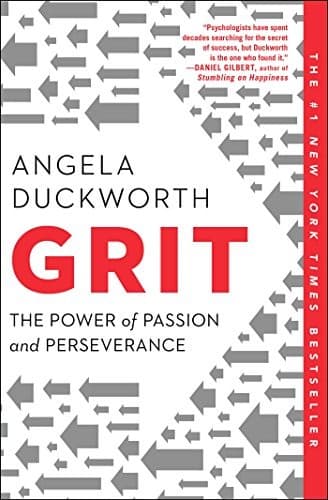
Grit
Angela Duckworth
“A complementary lens: persistence and long-term goal pursuit.”
Buy on Amazon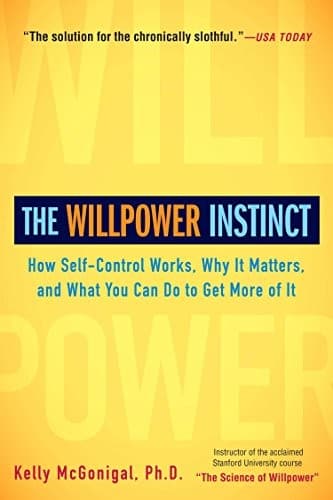
The Willpower Instinct
Kelly McGonigal
“More directly about self-control and the psychology of temptation.”
Buy on AmazonGo Deeper
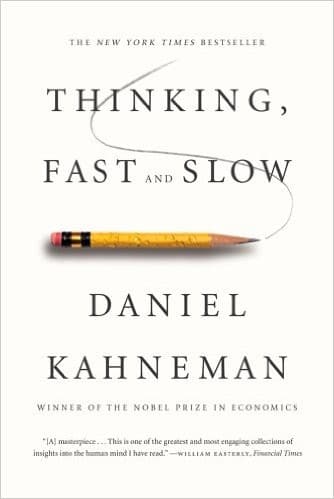
Thinking, Fast and Slow
Daniel Kahneman
“For deeper cognitive bias/automaticity context behind behavior.”
Buy on Amazon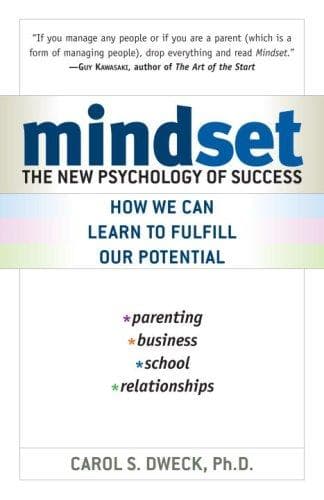
Mindset
Carol S. Dweck
“A complementary behavior-change lens focused on beliefs and learning.”
Buy on Amazon
Switch
Chip Heath, Dan Heath
“More structured change model for individuals/teams.”
Buy on AmazonWhat Readers Ask
It’s an explainer of how habits form and how they change. Duhigg’s core model is the habit loop (cue → routine → reward) and the idea that you often don’t delete a habit so much as rewrite the routine while keeping the same cue and reward.
Most readers who like behavior-change books consider it a solid, foundational read—especially if you want the ‘mechanics’ of habits, not just motivation. The main caveat people mention is that it can feel long because it teaches through a lot of case studies.
The Culture
In the Wild
Critics & Podcasts
- The New York Times (book excerpt) — Duhigg previewed core ideas from the book in a widely read NYT piece about how companies infer habits and predict behavior.
- Wikipedia — The book stayed on bestseller lists for years and helped popularize terms like ‘habit loop’ and ‘keystone habits’ in mainstream conversation.
- Reddit (reader comparisons) — In reader discussions, it’s commonly positioned as the ‘theory/science’ counterpart to more tactical habit books like Atomic Habits.
What Kind of Book Is This?
Community Tags
Charles Duhigg
Author Credibility
New York Times–winning journalist who writes about business and human behavior. Known for translating academic research into practical, story-driven frameworks for everyday change.
Community Trust: Mixed. Readers generally trust the reporting and sticky case studies, but some push back on how scientific findings are simplified. Overall it’s seen as credible journalism that works best as a practical lens rather than a definitive neuroscience textbook.
How to Read This
Best as: Paperback or audiobook
Case-study narrative reads well in audio, but highlighting the loop and your own cues/rewards is easiest in print.
Shelf Life
Re-read as a reference
Most of the value is in the core model; once you know it, you revisit specific chapters when you’re stuck on a habit.
Homework Level
Light (DIY exercises)
Not a workbook; you’ll need to do your own tracking of cues/rewards and routine experiments.
Best Life Stage
When you’re trying to rebuild routines
Most helpful when you want to redesign daily patterns and need a clear diagnosis framework.
Has it aged well?
The core model (habit loop + substitution) still shows up everywhere, and readers still reference it years later—especially concepts like keystone habits. What feels older is the presentation: newer habit books are often tighter and more tactic-heavy.
editorial
What does reading this say about you?
You’re the kind of person who wants the mechanism before the method: you’d rather understand the loop (cue → routine → reward) than chase motivation hacks.
editorial
What people get wrong
Many readers treat habits as something you ‘delete’ with willpower. Duhigg’s point is closer to substitution: you keep the cue and reward, then change the routine. Another misunderstanding is expecting a workbook—this is primarily an explainer built on stories.
editorial