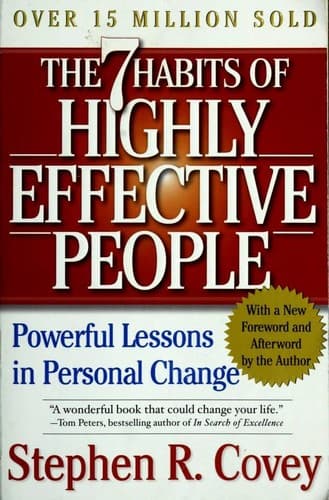
A foundational personal-effectiveness classic: revered for its principle-first framework and relationship focus, but criticized as dated, repetitive, and occasionally preachy.
Why It's Popular Right Now
It became a worldwide classic because it sells an “operating system” for life: values → priorities → relationships. Unlike many self-help books, it’s as much about character and trust as it is about productivity, which makes it durable across decades — even for people who complain about the dated tone.
Contents
Core Concepts
Effectiveness is built on principles and character, not hacks. The book moves from self-mastery (proactivity, clear direction, priorities) to collaborating with others (win-win, empathic communication, synergy), then maintaining the engine (renewal).
Be Proactive
Own your response; expand your Circle of Influence instead of reacting to circumstances.
Begin with the End in Mind
Define your values and a personal mission so daily choices have a north star.
First Things First
Put “big rocks” first: prioritize important work over urgent noise with weekly planning.
Think Win-Win
Shift from zero-sum tradeoffs to mutual benefit (where possible) in relationships and work.
Seek First to Understand
Listen to understand before you try to be understood; empathy is a performance advantage.
Sharpen the Saw
Renew yourself physically, mentally, socially, and spiritually to sustain performance.
The Reading Experience
Most readers recommend reading the habit summaries, doing the exercises, and revisiting. It’s not a one-sitting “productivity hack” book.
The Honest Take
Curated from 45.5K+ community discussions
Read If
- •You want a principles-first framework (character, values, relationships) — not hacks.
- •You’re stepping into leadership and need a mental model for trust + collaboration.
- •You feel busy-but-stuck and want a full operating system for priorities.
- •You’re open to older classics and can tolerate some repetition to get the structure.
Skip If
- •You only want modern, research-heavy behavioral science and short books.
- •You’ve read a lot of productivity classics and get bored by ‘common sense’ packaging.
- •You strongly dislike motivational/sermon-y tone or religious-adjacent language.
- •You want tactics for habits/time blocking more than a values/relationships framework.
What Works
Circle of Influence / proactive framing actually changes behavior
r/productivity 1“I actually use the learnings from it quite regularly. Some of the things I still use off the top of my head: 1. Importance vs urgency --> try and do more important, non-urgent things. Prioritisation is unbelievably important. I actually read another really good about this called Four Thousand Weeks that has a similar message on this -- there is too much to do, so the most important thing to...”
Habit 3 (“First Things First”) helps with priorities and boundaries
r/WatchandLearn 116“Great watch but I am surprised there wasn’t a recap: Independence: Habit 1: Be Proactive Habit 2: Begin with the End in Mind Habit 3: Put First Things First Interdependence: Habit 4: Think Win/Win Habit 5: Seek First to Understand, Then to Be Understood Habit 6: Synergize Habit 7: Sharpen the Saw”
Habit 5 improves communication (listen to understand)
r/WatchandLearn 116“Great watch but I am surprised there wasn’t a recap: Independence: Habit 1: Be Proactive Habit 2: Begin with the End in Mind Habit 3: Put First Things First Interdependence: Habit 4: Think Win/Win Habit 5: Seek First to Understand, Then to Be Understood Habit 6: Synergize Habit 7: Sharpen the Saw”
The private victory → public victory sequence is a solid leadership arc
r/productivity 36“Honestly i really recommend it. I have really found Covey's explanation of the first habit in particular to really impact my daily life. I have committed lots of it to memory and think that even quite basic things like, "when you can't control or influence something, the way you see the problem is the problem" apply to situations on a daily basis Also - if you don't want to read it and would prefer to just learn the principles, try out learning it.”
What Falls Flat
Feels dated / corporate / preachy to modern readers
r/books 9“Right. I think all religions typically boil down to 2 things. 1. How humans should treat other humans. 2. Those weird archaic rules that were meant to address sanitation issues and other hurdles to keeping a civilization together that weren't really understood at the time. I'd like to think this is where most religions rules about food come from. It was easy to assume shellfish contained the devil because it makes people sick when they don't cook or store it right. I believe most religious views toward gay relations and mater bating being a sin or 'unholy' act, stemmed from population needs - Masterbating a gay sex don't produce babies - which were needed if your community wanted to survive. I think as a modern society archaic religious rules stemming from #2 are not necessary and VERY outdated. But that doesn't mean #1 is wrong too. Leaving out all the dumb old rules which were mostly likely written to address societal needs. I think at the highest level, they all basically say the same thing "don't be dicks to each other."”
Repetitive and longer than it needs to be
r/CGPGrey 7“I'd really recommend [Agile Results](https://www.amazon.com/dp/0984548203/ref=cm_sw_r_cp_apa_TIn-zbZTX9ZRJ) for anyone interested in taking the ideas from Agile software development and applying it to personal life. It takes what works well for Agile and removes everything that has to do with teams. It's the most influential book on my productivity habits (much like Getting Things Done), though the book itself is a bit repetitive after half way though. I really liked its emphasis on planning results over multiple time scales (3 things to do this week, this month, this year) and the emphasis on self reviews. It works really well for rolling with the punches and dealing with changes of plans, rather than setting up a giant prescriptive plan.”
Too high-level for people who want habit mechanics
r/CGPGrey 13“> While I felt that the first portion of the book was great advice for broad strokes introspection, I felt that a lot of these habits can be classified as VAPID goals (from 7 Ways to Maximize Misery) in that they are Vague, Amorphous, Pie in the Sky, Irrelevant, and Delayed. This is an excellent connection. Thinking about how perfect your funeral will be is the definition of delayed.”
Real-Life Impact
“I might call the class life-changing -- getting to experience the habits instead of reading about them. Other class members seemed exhilarated too after we left at the end of the second day. Over time that initial enthusiasm wears off but I doubt if it will ever go away. In a way, some of it is common sense. Sometimes we simply need someone to keep reminding us of the best ways to live in order to live life at its fullest. For instance, if we put first things first, we will tackle an important task before playing a game. I think the world would be a better place if everyone including me could always wear the shoes of someone else and seek common ground even if we disagreed on a lot of things. These habits and positive behavior patterns can be especially useful in the work environment and in managerial positions. The [FranklinCovey Resource](https://resources.franklincovey.com/) center is a valuable repository of helpful resources for companies and individuals.”
“I'm divorced. If someone I had reached out to for help when my marriage was breakong down had told me to try loving more I would have punched them in the face.”
“I worked at a large oil company in the 90s. They went all-in on Covey's crap and sent us to training, including many of us who were "certified" to teach it to internal groups. I can just say that (1) Covey was a very weird dude who oozed con artist when he wasn't on a stage (2) the staff were mostly terrible and thought/behaved like a troop of pyramid scheme salesmen and (3) they made A LOT of money off of the company I worked for and literally delivered nothing but a 3 day boondoggle, a bunch of credenza food, and stacks and stacks of day planner sheets.”
“I loved the idea of writing out each hour of the day to see time wasted, but I realized that I need my video games and Netflix time (arguably wasted) to not be a depressed, anxiety ridden blob.”
“I’m an accounting student and our audit professor teaches this book religiously to his students and yet he grades comparatively. So if group A writes 8 possibilities and group B writes 2, you have to write at least four to get credit for that question; which does not sound like a “win/win” scenario to me. When I first started reading this book I liked it but then I realized it was koolaid.”
“I worked at a large oil company in the 90s. They went all-in on Covey's crap and sent us to training, including many of us who were "certified" to teach it to internal groups. I can just say that (1) Covey was a very weird dude who oozed con artist when he wasn't on a stage (2) the staff were mostly terrible and thought/behaved like a troop of pyramid scheme salesmen and (3) they made A LOT of money off of the company I worked for and literally delivered nothing but a 3 day boondoggle, a bunch of credenza food, and stacks and stacks of day planner sheets.”
“Most people do not listen with the intent to understand; they listen with the intent to reply.”
— Stephen R. Covey
The Quotes
From the Book
“Most people do not listen with the intent to understand; they listen with the intent to reply.”
“Between stimulus and response, there is a space. In that space is our power to choose our response.”
“Start with the end in mind.”
“The main thing is to keep the main thing the main thing.”
From the Crowd
“You’ll never be as young as you are right now. Enjoy the shit out if it. I’m turning 63 wish it was 35. Met a guy at my gym turning 75 said he wished he could be 63 again. Live in the present. Develop gratitude for what you have and who you are right now. 🙏🏻”
r/selfimprovement 447“Respectfully, spending 30k on productivity texts strikes me as absolutely bonkers.”
r/productivity 359“> You have ranged options, idiot. Use them. Look, just because I dumped INT doesn't make me a... oh. Hmm.”
r/dndnext 250“>You are not so Smart - David McRaney > >You are a Badass - Jen Sincero Those 7.3 days must of been quite the emotional rollercoaster for you.”
r/books 239“He just means he Googled "What day of the year is September 6th" and a Wikipedia article said "September 6th is the 249th day of the year".”
r/books 211“Haha yeah you could've probably omitted that. I definitely read it several times to try to understand what you were saying.”
r/books 152The Crowd Splits: The Debate
While generally beloved, the community is divided on the book's depth and originality.
Is it timeless wisdom or an outdated, preachy corporate classic?
Are the habits concrete enough to execute, or too broad to change behavior?
The Bookshelf
Read Instead
Atomic Habits
James Clear
“More tactics-first habit formation and environment design.”
Buy on Amazon
Getting Things Done
David Allen
“A concrete workflow for capturing, clarifying, and executing next actions.”
Buy on Amazon
The Power of Habit
Charles Duhigg
“More pop-science on habit loops and behavior change.”
Buy on AmazonRead Next
Essentialism
Greg McKeown
“Habit 3 vibes: ruthless priority-setting and saying no.”
Buy on Amazon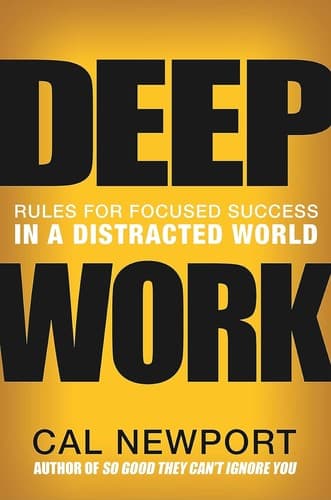
Deep Work
Cal Newport
“Operationalizes focus and attention as a priority system.”
Buy on Amazon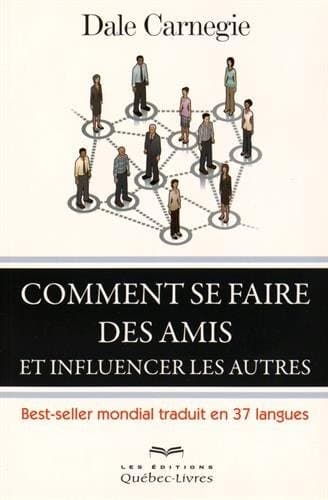
How to Win Friends and Influence People
Dale Carnegie
“A complementary classic on relationships and influence.”
Buy on AmazonGo Deeper
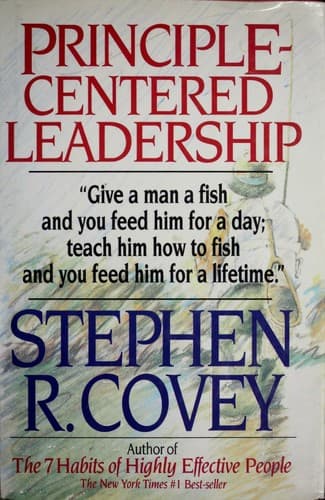
Principle-Centered Leadership
Stephen R. Covey
“Covey’s deeper leadership companion to the habits.”
Buy on Amazon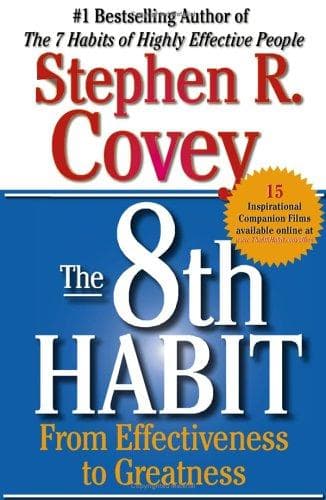
The 8th Habit
Stephen R. Covey
“Extends the framework into purpose and contribution.”
Buy on Amazon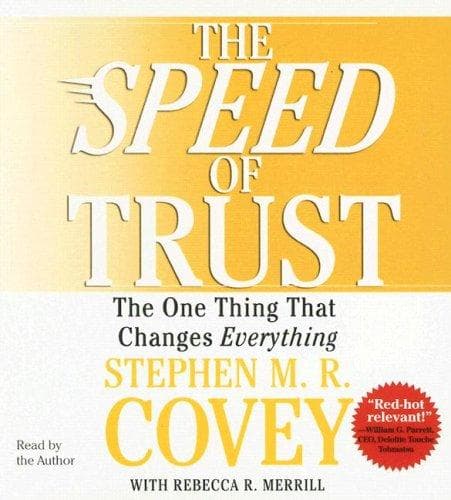
The SPEED of Trust
Stephen M. R. Covey
“A practical framework for trust as a measurable driver.”
Buy on AmazonWhat Readers Ask
The book’s core argument is that effectiveness comes from principles and character, not quick tricks. It lays out a progression from self-mastery (“private victory”) to working well with others (“public victory”), anchored by habits like proactivity, clear priorities, and empathic communication.
If you want a principle-based framework for priorities, relationships, and leadership, it’s worth reading—many readers call it a foundational classic. If you prefer modern, research-heavy habit tactics, you may find it dated or repetitive; skimming the habit summaries and exercises works well.
The Culture
In the Wild
Critics & Podcasts
- Wikipedia — Positions the book as a long-running bestseller and a foundational leadership/self-help text.
- FranklinCovey (official) — Frames the habits as principle-centered behavior change across personal and professional life.
- Open Library (work description) — Highlights multi-decade impact and modernized anniversary editions with updated takeaways.
What Kind of Book Is This?
Community Tags

Stephen R. Covey
Author Credibility
Stephen R. Covey (1932–2012) was an author, educator, and leadership consultant best known for The 7 Habits of Highly Effective People. He co-founded FranklinCovey and taught at Utah State University’s Huntsman School of Business.
Community Trust: High. Readers generally trust Covey because the framework is principles-first (values, integrity, relationships) and has held up for decades in real workplaces and families. Skeptics mainly object to the dated/corporate tone or a “seminar” vibe rather than accusing him of being a grifter; the credibility debate is more about style than substance.
How to Read This
Best as: Skim + apply
Most readers recommend reading the habit summaries, doing the exercises, and revisiting. It’s not a one-sitting “productivity hack” book.
Shelf Life
Re-read every few years
The framework is durable; people revisit Habit 3 (priorities) and Habit 5 (communication) as life circumstances change.
Homework Level
Medium
Works best if you write a mission statement, plan weekly, and practice empathic listening in real conversations.
Best Life Stage
Transitions + leadership moments
Especially useful when you’re taking on leadership, rebuilding routines, or trying to improve relationships.
Has it aged well?
The principles (agency, priorities, empathy, win-win) still land, but examples and tone can feel very 90s/corporate to modern readers. Many people recommend skimming and focusing on the habit summaries and exercises.
Reddit sentiment
What reading this signals
You’re into “character + principles” productivity: values, integrity, relationships, and leadership—not just hacks and trackers. It’s often seen as a serious, grown-up self-improvement classic (and sometimes as a corporate training book).
Reddit consensus
Is there an upsell ecosystem?
Yes. The book ties into the broader FranklinCovey training/coaching ecosystem used by companies and schools. Some readers find this fine; others feel it adds a “seminar” vibe.
Public info + Reddit sentiment
What people get wrong
Many readers treat the habits as a checklist of tactics, but the book insists the sequence matters (private victory → public victory) and that it’s about underlying principles and character. Another common miss: confusing “proactive” with “always positive” rather than “owning your response.”
Reddit + book framing