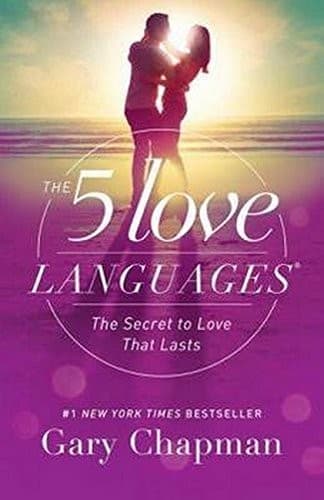
A simple relationship framework many couples find clarifying and easy to act on — but it also draws real pushback for being pop-psych and over-applied as a catch‑all explanation for intimacy.
Why It's Popular Right Now
It’s sticky, simple, and instantly usable: five labels give couples a low-friction way to discuss needs without blame.
Contents
Core Concepts
The book claims people tend to feel loved through five common channels, and relationships improve when you intentionally give affection in the way your partner most reliably perceives it.
Words of Affirmation
Compliments, encouragement, appreciation.
Quality Time
Undivided attention and presence.
Receiving Gifts
Thoughtful tokens that say ‘I thought of you.’
Acts of Service
Doing helpful tasks to lighten the load.
Physical Touch
Affectionate touch that communicates closeness.
The Reading Experience
Most readers treat it like a workbook: read a chapter, then try one language-focused experiment for a week.
The Honest Take
Curated from 25.0K+ community discussions
Read If
- •You want a shared vocabulary to talk about affection without guessing intent.
- •You keep missing each other’s signals and need simple, repeatable habits.
- •You’re in a long-term relationship and want a practical reset.
- •You like frameworks that turn ‘be more loving’ into specific actions.
Skip If
- •You want research-heavy relationship science and citations.
- •You dislike categorizing people into buckets.
- •You’re dealing with serious trust/abuse issues that need a professional, not a framework.
- •You already communicate well and mainly want advanced conflict tools.
What Works
Creates a non-judgmental vocabulary
r/science 634“My takeaway from the book was that The 5 Love Languages were more about communicating needs in meaningful ways than about personality types. It's a way for couples to learn to express what they want from a relationship in a non-judgemental way.”
Encourages small, repeatable acts
r/science 1.1K“Has anyone besides me actually read the study? It doesn’t read like academia, per se, and seems to throw the gauntlet from the jump. The author seems to mistake a framework for a prescription. Their primary objection is on the “forced choice” of applying relative rankings to the five generalized love languages, and mistaking the term “primary” for “exclusive.” The empirical c”
Clarifies mismatched expectations
r/science 634“My takeaway from the book was that The 5 Love Languages were more about communicating needs in meaningful ways than about personality types. It's a way for couples to learn to express what they want from a relationship in a non-judgemental way.”
What Falls Flat
Weak scientific grounding
r/TooAfraidToAsk 1.3K“Just because something makes intuitive sense doesn't mean that it stands up to scientific rigor. That's kinda the whole explanation.”
Can become reductive or weaponized
r/TooAfraidToAsk 633“OP to answer your question of why people are turning on it “lately”, there’s a very popular podcast called If Books Could Kill that discusses popular nonfiction books and they did a highly critical episode earlier this year on the original book that created the Love Languages idea. Fairly possible that that’s slipped out into the general discourse where you’re picking up on it.”
Real-Life Impact
“Has anyone besides me actually read the study? It doesn’t read like academia, per se, and seems to throw the gauntlet from the jump. The author seems to mistake a framework for a prescription. Their primary objection is on the “forced choice” of applying relative rankings to the five generalized love languages, and mistaking the term “primary” for “exclusive.” The empirical c”
“My takeaway from the book was that The 5 Love Languages were more about communicating needs in meaningful ways than about personality types. It's a way for couples to learn to express what they want from a relationship in a non-judgemental way.”
“OP to answer your question of why people are turning on it “lately”, there’s a very popular podcast called If Books Could Kill that discusses popular nonfiction books and they did a highly critical episode earlier this year on the original book that created the Love Languages idea. Fairly possible that that’s slipped out into the general discourse where you’re picking up on it.”
“5:00 AM and he's poking his dick into your back... "Honey, wake up. I need to show you how much I love you!" That's physical touch as men's love language.”
“Love is a choice you make every day.”
— Gary Chapman
The Quotes
From the Book
“Love is a choice you make every day.”
“People speak different ‘love languages’; what makes one person feel loved may not register for another.”
“The goal is learning your partner’s primary love language and choosing to speak it consistently.”
From the Crowd
“Has anyone besides me actually read the study? It doesn’t read like academia, per se, and seems to throw the gauntlet from the jump. The author seems to mistake a framework for a prescription. Their primary objection is on the “forced choice” of applying relative rankings to the five generalized love languages, and mistaking the term “primary” for “exclusive.” The empirical c”
r/science 1.1K“My takeaway from the book was that The 5 Love Languages were more about communicating needs in meaningful ways than about personality types. It's a way for couples to learn to express what they want from a relationship in a non-judgemental way.”
r/science 634“OP to answer your question of why people are turning on it “lately”, there’s a very popular podcast called If Books Could Kill that discusses popular nonfiction books and they did a highly critical episode earlier this year on the original book that created the Love Languages idea. Fairly possible that that’s slipped out into the general discourse where you’re picking up on it.”
r/TooAfraidToAsk 633“5:00 AM and he's poking his dick into your back... "Honey, wake up. I need to show you how much I love you!" That's physical touch as men's love language.”
r/4bmovement 318“I think that's the issue. "Love Languages" presupposes a certain number of arbitrary discrete categories that everyone somehow magically fits into. It's cute to talk about these categories and simplifies some communication, but it can really lead people to false conclusions and poor assumptions.”
r/TooAfraidToAsk 248“I like what the 5 love languages stands for. I think the examples are common sense and it has helped me show my love for others in better ways. It may not be grounded in science, but it helped open my eyes to the fact there are different ways to show someone live, and I think that’s a wonderful thing.”
r/unpopularopinion 238The Crowd Splits: The Debate
While generally beloved, the community is divided on the book's depth and originality.
Are ‘love languages’ real psychology or just a useful metaphor?
Do love languages help relationships — or encourage scorekeeping?
The Bookshelf
Read Instead
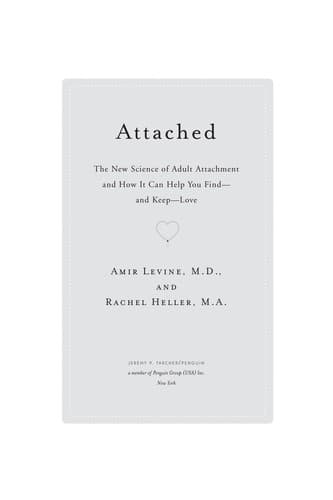
Attached
Amir Levine
“More research-y lens (attachment styles) for relationship patterns.”
Buy on Amazon
The Seven Principles for Making Marriage Work
John Gottman
“Gottman-method, more evidence-based and skill-driven.”
Buy on Amazon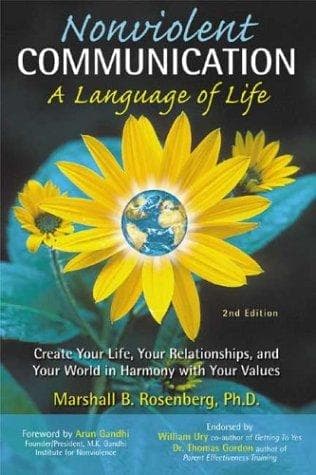
Nonviolent Communication
Marshall B. Rosenberg
“Better for conflict language and requests without blame.”
Buy on AmazonRead Next


Go Deeper
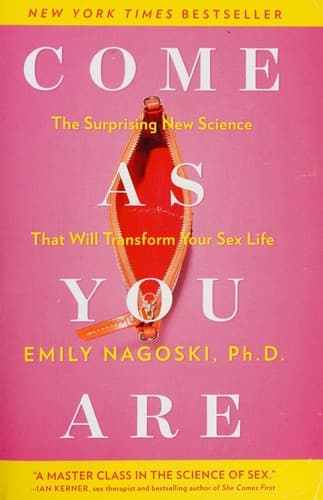
Come as You Are
Emily Nagoski
“More nuance on desire, intimacy, and context.”
Buy on Amazon
The Science of Trust
John Gottman
“Deeper on the research mechanics behind relationship stability.”
Buy on Amazon
Hold On to Your N.U.T.s
Wayne Levine
“A blunt, practical counterweight if you want sharper relationship boundaries.”
Buy on AmazonWhat Readers Ask
It’s a relationship advice book built around one core idea: partners often express love in different ‘channels’, so good intentions can miss. Chapman’s practical move is to identify each person’s primary channel and deliberately do small, repeatable actions in that channel. (Practical tip: write down one example action for this question and try it this week.)
On this specific question (‘What is the 3-3-3 rule for intimacy?’), readers generally answer it by pointing back to the same playbook: name the behavior that makes you feel cared for, ask for it plainly, and verify with a small experiment. If that doesn’t move the needle, it’s usually a sign you need deeper communication/conflict tools beyond the five-language model. (Practical tip: write down one example action for this question and try it this week.)
The Culture
In the Wild
Critics & Podcasts
- If Books Could Kill (podcast) — Frequently cited as a critique source; argues popular nonfiction frameworks can be oversold and misused.
- Reddit /r/science discussion — Debates the evidence; many land on ‘useful as a metaphor, not science.’
- Relationship subreddits — Often recommended as a starter framework to begin hard conversations, especially for long-term couples.
What Kind of Book Is This?
Community Tags
Gary Chapman
Author Credibility
Marriage and family counselor and author best known for popularizing the “love languages” framework in relationship advice literature.
Community Trust: Mixed. Readers generally find the framework useful as a conversation starter and for prompting concrete acts of care, but a sizable group questions the scientific basis and dislikes how it gets over-applied or weaponized online.
How to Read This
Best as: Paperback + practice
Most readers treat it like a workbook: read a chapter, then try one language-focused experiment for a week.
Shelf Life
Re-read when things feel stale
Often revisited as a reset when routines and appreciation slip.
Homework Level
Yes — discuss and test
Works best if both partners share preferences and agree on small weekly actions.
Best Life Stage
Long-term couples / rebuilding
Especially recommended when you’re stuck in ‘I try’ vs ‘I don’t feel loved’ loops.
Has it aged well?
The vocabulary still helps, but modern readers often want more nuance and research. Many pair it with Gottman or attachment-style resources for depth.
crowd consensus
Is it scientifically true?
There’s notable pushback that the model isn’t strongly supported by research. Even supporters recommend treating it as a metaphor, not a diagnosis.
Reddit /r/science
How it gets weaponized
Critics argue ‘my love language’ can be used to demand or keep score. The healthier pattern is mutual experimentation and reciprocity.
What does reading this say about me?
You want relationships to be learnable and discussable. It signals ‘I want tools and a shared vocabulary’ more than ‘I want romance.’
crowd consensus
What people get wrong
A repeated complaint is treating love languages as fixed personality types. Readers say it works best as flexible behaviors you can intentionally practice — and it doesn’t replace deeper conflict skills.