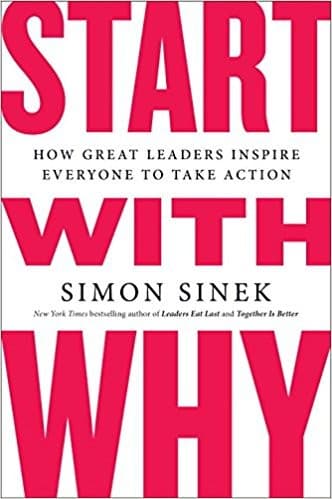
A sticky purpose framework that leaders love for clarity and messaging — but many readers say the book is mostly an expanded TED talk with repetition and light evidence.
Why It's Popular Right Now
It went viral because it gives leaders a single, sticky sentence—and a simple diagram—to explain inspiration. The TED talk spread the idea, and the book became the default “purpose” reference for founders, managers, and marketers.
Contents
Core Concepts
The crowd takeaway is simple: people commit when they feel a purpose, not when they hear features. The book’s central tool is the Golden Circle—define your Why first, then align the How and What to that purpose so your message and culture don’t drift.
Start with Why
Lead with purpose—why you exist—before explaining what you do.
The Golden Circle
A Why → How → What structure for communication and strategy.
Inspiration vs Manipulation
Sinek contrasts purpose-led loyalty with short-term tactics like discounts or fear.
Clarity creates alignment
When the Why is clear, teams make consistent decisions and messaging stays coherent.
Belonging & tribe
People follow leaders and brands that signal shared values, not just utility.
The Reading Experience
Many readers recommend watching the TED talk for the core thesis, then reading selectively for examples and reinforcement.
The Honest Take
Curated from 4.1K+ community discussions
Read If
- •You’re writing a pitch, mission, or brand story and it feels fuzzy
- •You lead a team and need a shared language for “purpose” and alignment
- •You want an inspiring reset more than a tactical playbook
Skip If
- •You want research-heavy evidence and rigorous causality
- •You dislike anecdote-driven TED-talk style books
- •You already have a clear mission and want execution tactics instead
What Works
Golden Circle as a messaging filter
r/Leadership 8“I like Start with Why. I also like What Got You Hear Won’t Get You There by Marshall Goldsmith, and I try to read The First 90 Days every few years as a refresher.”
Motivation via purpose, not features
r/GetMotivated 4“I've tried Sinek's method. If you can't identify a strong why, or a consistent why, it doesn't progress. On the other hand, if you CAN build a strong why, it has some useful stuff.”
Simple, memorable language
r/managers 19“I really liked Never Split the Difference, but I’d probably see it more as a negotiation and communication book than a pure leadership one. That said, it helped me a lot with confidence — especially around difficult conversations, setting boundaries, and pushing back calmly. Those skills show up in leadership all the time, even if the book isn’t framed that way. So maybe not ”
What Falls Flat
Repetition / TED-talk padding
r/marketing 7“I tried reading Sinek's book a few months ago and it's...terrible to say the least. You're better off with his TED talks.”
Anecdote-heavy, light on evidence
r/sales 37“My 2 cents worth. If you can identify your why I.e. why you are in sales, it makes selling much easier. I don't think anyone grows up wanting to be in sales, we tend to fall into it for the money. Money is however not the why. The why is what do you want the money for - your kids, your education, to care for elderly parents - whatever it is, your why will be based on your value”
Real-Life Impact
“**Building A Story Brand** by Donald Miller is better than some (possibly all?) of the ones listed”
“Nothing he’s saying is bad, but it’s also not really concrete and actionable anymore than if I were to tell you “be a good person.” I would absolutely call him an inspirational speaker before I’d call him anything else. I could see a company making his reading required as a point of culture building, but it is definitely silly, as all cultural mandates are, IMO.”
“Hi, Atomic Habits is a great one, indeed. The one about Why, is good, but doesn't answer the question, what if you don't find your why for a long time? Or external factor won't allow you to pursue this Why? Same issue with Happier (I have not read it, but checked out its summary). In my experience, one of the most beneficial skills for anyone, especially a midlifer, is Mindf”
“Brave New World by Aldous Huxley - it was one of the first “required reading” books that actually made an impact on me. The Pleasure of my Company by Steve Martin - this novella follows a guy learning to cope and deal with his numerous neuroses. SM is not only a great comedian but excellent author. The Hitchhikers Guide to the Galaxy - as already mentioned several times in th”
“The Power of Intentional Leadership”
— Simon Sinek
The Quotes
From the Book
“The Power of Intentional Leadership”
“The 4-Hour Work Week”
“The 7 Habits of Highly Effective People”
“The Art of Possibility”
“If it doesn't work for you then it's your fault, no refunds, try again!”
From the Crowd
“I like Start with Why. I also like What Got You Hear Won’t Get You There by Marshall Goldsmith, and I try to read The First 90 Days every few years as a refresher.”
r/Leadership 8“I tried reading Sinek's book a few months ago and it's...terrible to say the least. You're better off with his TED talks.”
r/marketing 7“I've tried Sinek's method. If you can't identify a strong why, or a consistent why, it doesn't progress. On the other hand, if you CAN build a strong why, it has some useful stuff.”
r/GetMotivated 4“Sinek skipped right to motivational speaker and author. This has always been his only job. He is very successful at talking and writing, but I wouldn’t take business or sales advice from someone who hasn’t promoted anything other than himself.”
r/sales 3The Crowd Splits: The Debate
While generally beloved, the community is divided on the book's depth and originality.
Is the Golden Circle a genuinely useful framework, or just a catchy diagram?
Is this better as a TED talk, or worth a full book read?
The Bookshelf
Read Instead
The Infinite Game
Simon Sinek
“Same author; extends the purpose/mission idea into long-term strategy.”
Buy on Amazon
Drive
Daniel H. Pink
“More research-backed on motivation (autonomy, mastery, purpose).”
Buy on Amazon
Leaders Eat Last
Simon Sinek
“If you want culture + trust-building mechanics beyond messaging.”
Buy on AmazonRead Next
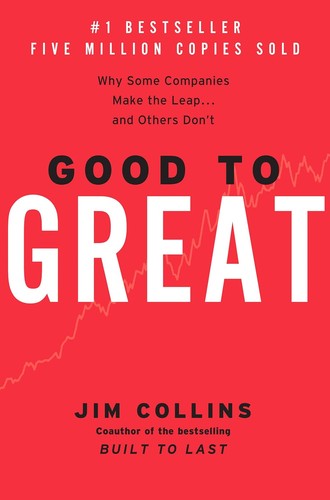
Good to Great
Jim Collins
“More operational rigor on what makes organizations durable.”
Buy on Amazon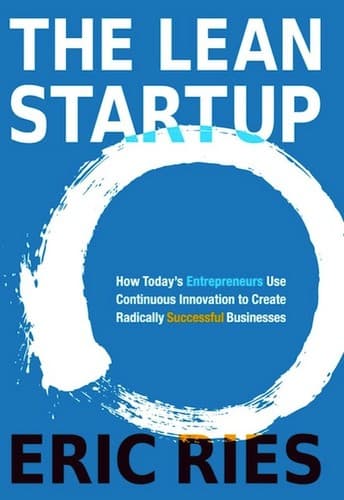
The Lean Startup
Eric Ries
“Turn the ‘why’ into testing loops and measurable learning.”
Buy on Amazon
Made to Stick
Chip Heath & Dan Heath
“Concrete tools for communicating ideas so people remember them.”
Buy on AmazonGo Deeper

The Culture Code
Daniel Coyle
“If you want the mechanics of building belonging and high-trust teams.”
Buy on Amazon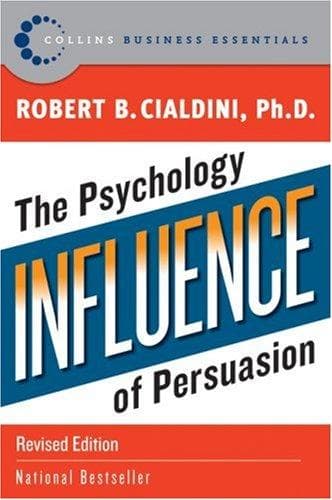
Influence
Robert B. Cialdini
“Persuasion principles that complement purpose-driven messaging.”
Buy on Amazon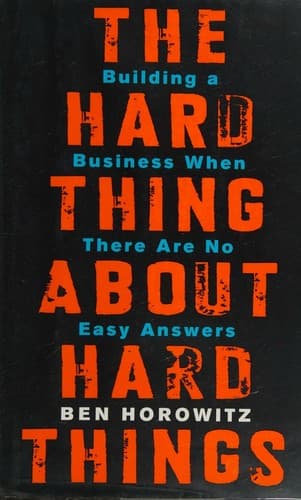
The Hard Thing About Hard Things
Ben Horowitz
“Counterbalance: gritty leadership decisions when purpose isn’t enough.”
Buy on AmazonWhat Readers Ask
Q1: What is the book Start with Why about? Answer: Start With Why is used as a purpose-and-messaging lens: define the Why first, align the How, then communicate the What. In practice, readers apply it by rewriting pitches, onboarding narratives, and team decisions to prove the Why. Crowd nuance: some find it transformative for clarity, others feel the core idea is obvious and the book repeats it.
Q2: What is Simon Sinek's most famous quote? Answer: Start With Why is used as a purpose-and-messaging lens: define the Why first, align the How, then communicate the What. In practice, readers apply it by rewriting pitches, onboarding narratives, and team decisions to prove the Why. Crowd nuance: some find it transformative for clarity, others feel the core idea is obvious and the book repeats it.
The Culture
In the Wild
Critics & Podcasts
- TED Talk (Simon Sinek) — Most people encounter the core thesis via the TED talk; many readers say the book is an expansion of that talk with added examples.
- Harvard Business Review (author/idea coverage) — Often referenced in leadership/management discourse as a framing tool for purpose-driven strategy and communication.
- Goodreads (reader reviews) — Review patterns mirror Reddit: strong “inspiring clarity” reactions vs complaints about repetition and light evidence.
What Kind of Book Is This?
Community Tags

Simon Sinek
Author Credibility
Author and speaker best known for popularizing the “Start With Why”/Golden Circle framework for purpose-driven leadership and communication.
Community Trust: Mixed. Readers generally like Sinek’s clarity and inspirational framing, but a recurring critique is that his arguments rely on anecdotes and TED-style storytelling more than hard evidence. The crowd tends to trust him as a communicator and motivator, not as a rigorous researcher.
How to Read This
Best as: TED talk first, then skim the book
Many readers recommend watching the TED talk for the core thesis, then reading selectively for examples and reinforcement.
Shelf Life
Re-read when your work feels aimless
Useful as a reset when you need to clarify mission, narrative, or strategy.
Homework Level
Medium — write your “Why” statement
The book works best when you actually draft a Why/How/What and pressure-test it with real decisions.
Best Life Stage
Building something (career shift, startup, team leadership)
Hits hardest when you’re responsible for motivating other humans, not just yourself.
Has it aged well?
The core idea still holds, but readers note the book feels like an early-2010s TED expansion. The value is the simple mental model; the supporting stories can feel dated or thin if you want evidence.
crowd consensus
What genre is it really?
More leadership communication + brand narrative than classic self-help. It’s a book you use to explain and align, not a step-by-step habit system.
editorial
What reading this signals
You’re the kind of person who cares about mission, storytelling, and aligning people around a purpose—not just tactics. In some circles it reads as “TED-core leadership”.
crowd consensus
Is there an upsell ecosystem?
Readers frequently encounter the broader Sinek ecosystem (talks, workshops, corporate culture content). Some feel the book is designed to funnel into consulting-style applications; others don’t mind and treat it as a free framework.
crowd consensus
Common misunderstandings
Many readers treat “find your why” as a one-time slogan exercise. The crowd takeaway is that it only works when the Why is backed by consistent behavior and a coherent How; otherwise it becomes purpose-washing.
crowd consensus