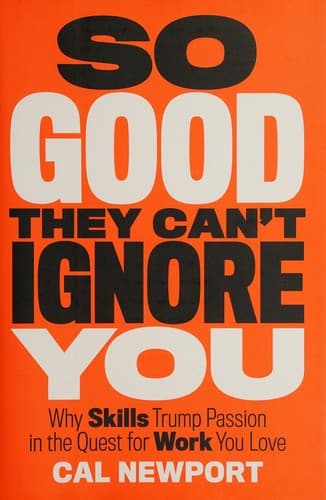
A sharp counter to ‘follow your passion.’ Readers value the career-capital framing, though some argue skill-building doesn't automatically lead to loving the work.
Why It's Popular Right Now
It's the antidote to vague career advice. Newport gives a concrete counter-plan to “follow your passion”: build rare skills, earn leverage, then design work you like.
Contents
Core Concepts
A contrarian career guide: instead of “find your passion,” build career capital—rare and valuable skills—then use that leverage to craft work you actually enjoy.
Career Capital
Become so good they can't ignore you by building scarce, valuable skills.
Passion is a side-effect
Most people don't start with passion; they grow into it after competence and autonomy.
Craftsman mindset
Focus on what you can offer (skills + output), not what the job offers you.
Small bets
Experiment with projects to test fit before making big identity-level moves.
Control requires capital
Autonomy is earned; you need proof of value before negotiating freedom.
The Reading Experience
Concept-driven; easy to highlight and revisit the core arguments and examples.
The Honest Take
Curated from 67+ community discussions
Read If
- •You feel stuck waiting for “passion” to appear and want a concrete plan.
- •You're early-career and want leverage: skills, proof, and optionality.
- •You're considering a career switch and want to de-risk it with experiments.
Skip If
- •You already have strong career capital and want advanced negotiation/tactics.
- •You're looking for a feel-good inspirational memoir more than a framework.
- •You want deep labor-economics research (this is more argument + examples).
What Works
Career capital as the real moat
r/dataengineering 3“I'll bite. This'll be long so strap in I've read the book twice and have thought deeply on this. Its about 2 things: having rare and valuable skills that employers actually want, and having unfakable signals that indicate how good you actually are at these skills.The second test is were most people get tripped up. First, you need to think like a layperson or exec when evaluating career capital. Data engineering itself is a fairly rare and valuable skill. Every software tech company needs data engineers. But its not a particularly sexy role like frontend or AI engineering, thus there are far less DEs. Data engineering is a necessary expense, therefore youre already valuable from an employers perspective. If you weren't they wouldn't pay you so much. But Im assuming you want to become MORE rare and MORE valuable. This is where having strong signaling for your skills comes into play. Can you convince employers you are one of the best data engineers in the industry? This is about branding: coke isnt inherently better than your local cola brand: they have a stronger message and presence. Coke is part of the ethos of our very culture. Its cool to drink coke. Everyone agrees coke is the best because its has constructed a legend surrounding itself. Like coke you need to build this story around yourself: one that is unignorable. Make no mistake though, this is HARD. Extremely so. In software and data engineering think about the AI scientists/engineers who received 9 figure offers to work for metas super AI team. Why were they chosen? Spoiler: It isnt because they were inherently the best qualified in the world. Its because they attained legendary status in the AI world. Most of them did this by having been employed by a legendary company in the space with known and extremely rigorous hiring standards (most of them were poached from openAI, antropic, and google brain). To work for any of these companies you needed to have a phd from a top 4 cs school, harvard, or have done exceptional research at a top ai research lab. If youre a regular engineer, you basically need to have worked for a FAANG level company beforehand. Even if you have all that you still need to be a fantastic interviewer to work at any of these companies. Most companies use signals like these to guess how good you are. At a certain skill and signal strength level, it becomes impossible to ignore certain people. I can pass over a random data engineer from a no name startup. I cant pass up the MIT grad, ex Google, Staff Data Engineer with an award winning blog. The latter is a talent top companies clamor over. They are, by definition, so good they cant be ignored. Of course, theres a lot of nuance here. Please ask questions and I can clarify a lot of points”
Anti “follow your passion” message (reduces anxiety)
r/RedditReads 1“In this eye-opening account, Cal Newport debunks the long-held belief that "follow your passion" is good advice. Not only is the cliché flawed-preexisting passions are rare and have little to do with how most people end up loving their work-but it can also be dangerous, leading to anxiety and chronic job hopping.After making his case against passion, Newport sets out on a quest to discover the reality of how people end up loving what they do. Spending time with organic farmers, venture capitalists, screenwriters, freelance computer programmers, and others who admitted to deriving great satisfaction from their work, Newport uncovers the strategies they used and the pitfalls they avoided in developing their compelling careers.Matching your job to a preexisting passion does not matter, he reveals. Passion comes after you put in the hard work to become excellent at something valuable, not before. In other words, what you do for a living is much less important than how you do it.With a title taken from the comedian Steve Martin, who once said his advice for aspiring entertainers was to "be so good they can't ignore you," Cal Newport's clearly written manifesto is mandatory reading for anyone fretting about what to do with their life, or frustrated by their current job situation and eager to find a fresh new way to take control of their livelihood. He provides an evidence-based blueprint for creating work you love.So Good They Can't Ignore You will change the way we think about our careers, happiness, and the crafting of a remarkable life.”
A craftsman lens for choosing what to do next
r/BettermentBookClub 11“I read deep work by Cal Newport, the key of the book is "start to do things and stop bullshitting" So.. that's it The hard part is find "the thing" to do IMO, but start with something and try to stay there. Makes sense? I hope so (Sorry for my English, it's no my first language) ((PS I read Digital Minimalism by Cal Newport too, just to say to you))”
What Falls Flat
Doesn't guarantee you'll love the work
r/financialindependence 15“I've recently been inspired by Deep Work as well, will have to check out Cal Newport's other book you recommended. His "Digital Minimalism" was good. He recommends his friends book "Ultralearning" either in his book or blog. Been reading that, really good. Love your Dad's two principals as well!”
May feel obvious to experienced readers
r/AskSocialScience 3“The research method he appears to be using (identifying successful people and then trying to identify patterns) isn't sound. It's basically data mining + selection bias. I'm not aware of any academic research on his work particularly, but you can read a good [critique of Jim Collinss "Good to Great"](http://www.business.unr.edu/faculty/simmonsb/badm720/ampgoodtogreat2.pdf) which runs on similar lines. > The use of data mining is a fundamental research flaw in GTG. Data mining is the process of collecting and searching for patterns in data and then once patterns are identified, formulating explanations that are treated as underlying causes or principles. The problem is that since the patterns may depend completely on the specific time period and dataset gathered, data mining provides no legitimate evidence of applicability outside the sample firms or time period. This problem with data mining (also called data dredging, data grubbing, or fishing) is aptly described by Hand (1998, p. 112): > > By definition, data that are not simply uniform have differences which can be interpreted as patterns. The trouble is that many of these “patterns” will simply be a product of random fluctuations, and will not represent any underlying structure. The object of data analysis is not to model the fleeting random patterns of the moment, but to model the underlying structures which give rise to consistent and replicable patterns. To statisticians, then, the term data mining conveys the sense of naı¨ve hope vainly struggling against the cold realities of chance. > Thus, according to Hand, researchers using data mining may well draw conclusions that are based either on purely random patterns or on patterns that exist only in the sample firms or time period studied. > Collins’ method of identifying his five principles in GTG is data mining. By Collins’ description, he started with a list of companies that appeared in the Fortune 500 rankings and screened them four times to arrive at the 11 GTG companies. He then studied the 11 GTG companies relative to 11 comparison companies to “discover the essential and distinguishing factors at work” (p. 3). This is data mining. As Collins put it: “It is important to understand that we developed all of the concepts in this book by making empirical deductions directly from the data. We did not begin this project with a theory to test or prove. We sought to build a theory from the ground up, derived directly from the evidence” (p. 10). Given the data mining methodology in GTG, Collins provided no evidence that his five principles are anything other than five “fleeting random patterns.” In other words, if Collins is correct, his statistics suggest that it’s just luck. As Walker (2006) noted, this “creates a neat little circle of inference: Great firms do these things, so do these things and your firm will be great” (p. 120). I can't speak as to any of the specific claims Newport makes. They may well be correct, but his method of discovery was flawed.”
Real-Life Impact
“I've recently been inspired by Deep Work as well, will have to check out Cal Newport's other book you recommended. His "Digital Minimalism" was good. He recommends his friends book "Ultralearning" either in his book or blog. Been reading that, really good. Love your Dad's two principals as well!”
“I read deep work by Cal Newport, the key of the book is "start to do things and stop bullshitting" So.. that's it The hard part is find "the thing" to do IMO, but start with something and try to stay there. Makes sense? I hope so (Sorry for my English, it's no my first language) ((PS I read Digital Minimalism by Cal Newport too, just to say to you))”
“The research method he appears to be using (identifying successful people and then trying to identify patterns) isn't sound. It's basically data mining + selection bias. I'm not aware of any academic research on his work particularly, but you can read a good [critique of Jim Collinss "Good to Great"](http://www.business.unr.edu/faculty/simmonsb/badm720/ampgoodtogreat2.pdf) which runs on similar lines. > The use of data mining is a fundamental research flaw in GTG. Data mining is the process of collecting and searching for patterns in data and then once patterns are identified, formulating explanations that are treated as underlying causes or principles. The problem is that since the patterns may depend completely on the specific time period and dataset gathered, data mining provides no legitimate evidence of applicability outside the sample firms or time period. This problem with data mining (also called data dredging, data grubbing, or fishing) is aptly described by Hand (1998, p. 112): > > By definition, data that are not simply uniform have differences which can be interpreted as patterns. The trouble is that many of these “patterns” will simply be a product of random fluctuations, and will not represent any underlying structure. The object of data analysis is not to model the fleeting random patterns of the moment, but to model the underlying structures which give rise to consistent and replicable patterns. To statisticians, then, the term data mining conveys the sense of naı¨ve hope vainly struggling against the cold realities of chance. > Thus, according to Hand, researchers using data mining may well draw conclusions that are based either on purely random patterns or on patterns that exist only in the sample firms or time period studied. > Collins’ method of identifying his five principles in GTG is data mining. By Collins’ description, he started with a list of companies that appeared in the Fortune 500 rankings and screened them four times to arrive at the 11 GTG companies. He then studied the 11 GTG companies relative to 11 comparison companies to “discover the essential and distinguishing factors at work” (p. 3). This is data mining. As Collins put it: “It is important to understand that we developed all of the concepts in this book by making empirical deductions directly from the data. We did not begin this project with a theory to test or prove. We sought to build a theory from the ground up, derived directly from the evidence” (p. 10). Given the data mining methodology in GTG, Collins provided no evidence that his five principles are anything other than five “fleeting random patterns.” In other words, if Collins is correct, his statistics suggest that it’s just luck. As Walker (2006) noted, this “creates a neat little circle of inference: Great firms do these things, so do these things and your firm will be great” (p. 120). I can't speak as to any of the specific claims Newport makes. They may well be correct, but his method of discovery was flawed.”
“I'll bite. This'll be long so strap in I've read the book twice and have thought deeply on this. Its about 2 things: having rare and valuable skills that employers actually want, and having unfakable signals that indicate how good you actually are at these skills.The second test is were most people get tripped up. First, you need to think like a layperson or exec when evaluating career capital. Data engineering itself is a fairly rare and valuable skill. Every software tech company needs data engineers. But its not a particularly sexy role like frontend or AI engineering, thus there are far less DEs. Data engineering is a necessary expense, therefore youre already valuable from an employers perspective. If you weren't they wouldn't pay you so much. But Im assuming you want to become MORE rare and MORE valuable. This is where having strong signaling for your skills comes into play. Can you convince employers you are one of the best data engineers in the industry? This is about branding: coke isnt inherently better than your local cola brand: they have a stronger message and presence. Coke is part of the ethos of our very culture. Its cool to drink coke. Everyone agrees coke is the best because its has constructed a legend surrounding itself. Like coke you need to build this story around yourself: one that is unignorable. Make no mistake though, this is HARD. Extremely so. In software and data engineering think about the AI scientists/engineers who received 9 figure offers to work for metas super AI team. Why were they chosen? Spoiler: It isnt because they were inherently the best qualified in the world. Its because they attained legendary status in the AI world. Most of them did this by having been employed by a legendary company in the space with known and extremely rigorous hiring standards (most of them were poached from openAI, antropic, and google brain). To work for any of these companies you needed to have a phd from a top 4 cs school, harvard, or have done exceptional research at a top ai research lab. If youre a regular engineer, you basically need to have worked for a FAANG level company beforehand. Even if you have all that you still need to be a fantastic interviewer to work at any of these companies. Most companies use signals like these to guess how good you are. At a certain skill and signal strength level, it becomes impossible to ignore certain people. I can pass over a random data engineer from a no name startup. I cant pass up the MIT grad, ex Google, Staff Data Engineer with an award winning blog. The latter is a talent top companies clamor over. They are, by definition, so good they cant be ignored. Of course, theres a lot of nuance here. Please ask questions and I can clarify a lot of points”
“Be so good they can't ignore you.”
— Cal Newport
The Quotes
From the Book
“Be so good they can't ignore you.”
“Following your passion is not a strategy.”
“Control over your working life is earned through valuable skills.”
From the Crowd
“I've recently been inspired by Deep Work as well, will have to check out Cal Newport's other book you recommended. His "Digital Minimalism" was good. He recommends his friends book "Ultralearning" either in his book or blog. Been reading that, really good. Love your Dad's two principals as well!”
r/financialindependence 15“I read deep work by Cal Newport, the key of the book is "start to do things and stop bullshitting" So.. that's it The hard part is find "the thing" to do IMO, but start with something and try to stay there. Makes sense? I hope so (Sorry for my English, it's no my first language) ((PS I read Digital Minimalism by Cal Newport too, just to say to you))”
r/BettermentBookClub 11“The research method he appears to be using (identifying successful people and then trying to identify patterns) isn't sound. It's basically data mining + selection bias. I'm not aware of any academic research on his work particularly, but you can read a good [critique of Jim Collinss "Good to Great"](http://www.business.unr.edu/faculty/simmonsb/badm720/ampgoodtogreat2.pdf) which runs on similar lines. > The use of data mining is a fundamental research flaw in GTG. Data mining is the process of collecting and searching for patterns in data and then once patterns are identified, formulating explanations that are treated as underlying causes or principles. The problem is that since the patterns may depend completely on the specific time period and dataset gathered, data mining provides no legitimate evidence of applicability outside the sample firms or time period. This problem with data mining (also called data dredging, data grubbing, or fishing) is aptly described by Hand (1998, p. 112): > > By definition, data that are not simply uniform have differences which can be interpreted as patterns. The trouble is that many of these “patterns” will simply be a product of random fluctuations, and will not represent any underlying structure. The object of data analysis is not to model the fleeting random patterns of the moment, but to model the underlying structures which give rise to consistent and replicable patterns. To statisticians, then, the term data mining conveys the sense of naı¨ve hope vainly struggling against the cold realities of chance. > Thus, according to Hand, researchers using data mining may well draw conclusions that are based either on purely random patterns or on patterns that exist only in the sample firms or time period studied. > Collins’ method of identifying his five principles in GTG is data mining. By Collins’ description, he started with a list of companies that appeared in the Fortune 500 rankings and screened them four times to arrive at the 11 GTG companies. He then studied the 11 GTG companies relative to 11 comparison companies to “discover the essential and distinguishing factors at work” (p. 3). This is data mining. As Collins put it: “It is important to understand that we developed all of the concepts in this book by making empirical deductions directly from the data. We did not begin this project with a theory to test or prove. We sought to build a theory from the ground up, derived directly from the evidence” (p. 10). Given the data mining methodology in GTG, Collins provided no evidence that his five principles are anything other than five “fleeting random patterns.” In other words, if Collins is correct, his statistics suggest that it’s just luck. As Walker (2006) noted, this “creates a neat little circle of inference: Great firms do these things, so do these things and your firm will be great” (p. 120). I can't speak as to any of the specific claims Newport makes. They may well be correct, but his method of discovery was flawed.”
r/AskSocialScience 3“I'll bite. This'll be long so strap in I've read the book twice and have thought deeply on this. Its about 2 things: having rare and valuable skills that employers actually want, and having unfakable signals that indicate how good you actually are at these skills.The second test is were most people get tripped up. First, you need to think like a layperson or exec when evaluating career capital. Data engineering itself is a fairly rare and valuable skill. Every software tech company needs data engineers. But its not a particularly sexy role like frontend or AI engineering, thus there are far less DEs. Data engineering is a necessary expense, therefore youre already valuable from an employers perspective. If you weren't they wouldn't pay you so much. But Im assuming you want to become MORE rare and MORE valuable. This is where having strong signaling for your skills comes into play. Can you convince employers you are one of the best data engineers in the industry? This is about branding: coke isnt inherently better than your local cola brand: they have a stronger message and presence. Coke is part of the ethos of our very culture. Its cool to drink coke. Everyone agrees coke is the best because its has constructed a legend surrounding itself. Like coke you need to build this story around yourself: one that is unignorable. Make no mistake though, this is HARD. Extremely so. In software and data engineering think about the AI scientists/engineers who received 9 figure offers to work for metas super AI team. Why were they chosen? Spoiler: It isnt because they were inherently the best qualified in the world. Its because they attained legendary status in the AI world. Most of them did this by having been employed by a legendary company in the space with known and extremely rigorous hiring standards (most of them were poached from openAI, antropic, and google brain). To work for any of these companies you needed to have a phd from a top 4 cs school, harvard, or have done exceptional research at a top ai research lab. If youre a regular engineer, you basically need to have worked for a FAANG level company beforehand. Even if you have all that you still need to be a fantastic interviewer to work at any of these companies. Most companies use signals like these to guess how good you are. At a certain skill and signal strength level, it becomes impossible to ignore certain people. I can pass over a random data engineer from a no name startup. I cant pass up the MIT grad, ex Google, Staff Data Engineer with an award winning blog. The latter is a talent top companies clamor over. They are, by definition, so good they cant be ignored. Of course, theres a lot of nuance here. Please ask questions and I can clarify a lot of points”
r/dataengineering 3“I suppose it is bad advice *if* those employees then couldn’t find a new job and somehow had to change careers and were unhappy. Alternatively, they moved to a new company who appreciated their experience and maybe it worked out overall..? It is hard to extrapolate from some of one person’s experiences. I would say that a person who is seriously experienced and enjoys their field is likely to land on their feet even if a company treats them badly, and that Cal Newport’s advice is *general* not specific to any field.”
r/productivity 3The Crowd Splits: The Debate
While generally beloved, the community is divided on the book's depth and originality.
Is “follow your passion” truly bad advice?
Does career capital actually make you love the work?
The Bookshelf
Read Instead
Designing Your Life
Bill Burnett & Dave Evans
“More exercises and structured reflection for career redesign.”
Buy on Amazon
What Color Is Your Parachute?
Richard N. Bolles
“Classic job-search + self-inventory workbook if you want tactics.”
Buy on Amazon
Range
David Epstein
“Counterpoint if you're worried about specializing too early.”
Buy on AmazonRead Next
Deep Work
Cal Newport
“Turns the craftsman mindset into a focus practice that builds skills faster.”
Buy on Amazon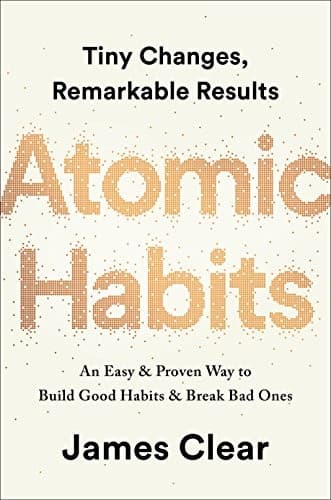
Atomic Habits
James Clear
“Use habit systems to execute the skill-building plan.”
Buy on Amazon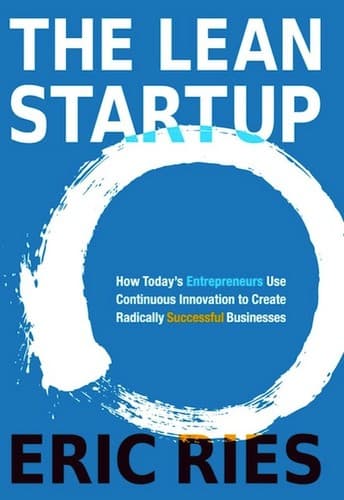
The Lean Startup
Eric Ries
“A “small bets” philosophy applied to building products and careers.”
Buy on AmazonGo Deeper


What Readers Ask
The book argues that passion is usually the result of getting good at something, not the prerequisite. Build rare, valuable skills (“career capital”), then use that leverage to shape work you enjoy.
If you're stuck in career anxiety or tempted to job-hop chasing “passion,” it's a useful reset with a concrete alternative. If you're already established and want advanced tactics, it may feel like a familiar message.
The Culture
In the Wild
Critics & Podcasts
- Hachette / Grand Central Publishing — Publisher synopsis centers the anti-passion argument and how people come to love work through skill and autonomy.
- Reddit (LifeProTips discussion) — Big thread debating whether passion-first advice harms people; Newport is cited as the counterpoint.
- Reddit (BettermentBookClub) — Readers discuss translating the thesis into a plan: picking skills, building a stack, and making iterative moves.
What Kind of Book Is This?
Community Tags
Cal Newport
Author Credibility
Computer science professor and writer focused on productivity and meaningful work. Known for arguing that skills, focus, and deliberate practice beat “passion-first” career advice.
Community Trust: High. Across discussions, Newport is generally treated as a credible, practical voice on work and productivity. Readers cite his ideas as a useful counter to vague “follow your passion” advice, and he’s often referenced alongside his other work (e.g., Deep Work). The main skepticism is usually about whether the thesis applies universally, not about his integrity.
How to Read This
Best as: Paperback
Concept-driven; easy to highlight and revisit the core arguments and examples.
Shelf Life
Re-read every few years
Most useful at career inflection points: switching fields, negotiating autonomy, or building a portfolio.
Homework Level
Medium
Works best if you turn “career capital” into a plan: skills to build, projects to ship, and proof to collect.
Best Life Stage
Early to mid-career
Especially useful when you're tempted to job-hop searching for “passion” but need a concrete alternative.
Aged well in the portfolio/creator era
The thesis fits today's proof-of-work world: capital comes from output, not just credentials.
editorial
What reading this says about you
You prefer craftsman, systems-first career advice: build proof, earn autonomy, then optimize for meaning.
editorial
Not flagged as an upsell funnel
Compared to many career books, Reddit discussion frames it as thesis + examples, not a course/MLM funnel.
crowd consensus
People think it's ‘never follow passion’
The point isn't to outlaw passion; it's that passion is usually downstream of competence and autonomy. The takeaway is “skills first,” with nuance about timing and leverage.
crowd consensus