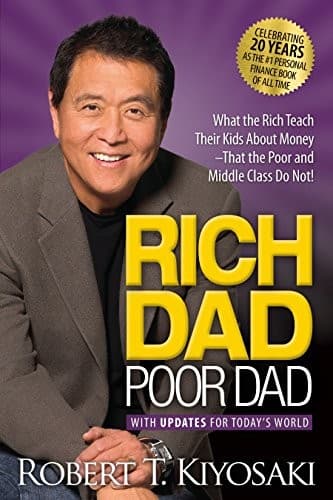
A gateway personal-finance classic that rewires how people think about assets and income—while drawing heavy criticism for being light on specifics and wrapped in an upsell ecosystem.
Why It's Popular Right Now
It became a gateway book because it attacks the “work hard, save, retire” script and replaces it with simple, repeatable mental models—assets vs. liabilities, cashflow, and financial education. Readers share it because it’s easy to read, provocative, and makes people feel like they’re finally thinking about money the right way.
Contents
Core Concepts
A story-driven argument that financial freedom comes from financial education and owning cash-flowing assets, not from climbing a salary ladder. The book pushes readers to think in terms of cashflow and ownership, and to build income streams that don’t require their time each day.
Work to learn, not just to earn
Use jobs to gain skills and financial literacy, not only a paycheck.
Assets vs. liabilities lens
Prioritize things that put money in your pocket; be honest about what drains cash.
Make money work for you
Shift from trading time for money to owning income-producing assets.
Financial education
Understand statements, taxes, and investing basics so you can evaluate opportunities.
Build income streams
Aim for multiple sources of income and resilience beyond a single salary.
The Reading Experience
Most readers treat it as a fast mindset primer; audio works well because the value is in the stories and repeated concepts.
The Honest Take
Curated from 218.7K+ community discussions
Read If
- •You feel stuck in “work hard, save more” advice and want a different mental model.
- •You want a simple lens for thinking about assets, liabilities, and cashflow.
- •You’re early in your money journey and need motivation to learn investing basics.
- •You like narrative, parable-style teaching more than spreadsheets.
Skip If
- •You want detailed, evidence-based investing guidance and numbers-driven rigor.
- •You’re allergic to guru vibes, hype, and sales funnels.
- •You already follow a strong plan (index funds, budgeting) and want advanced strategy.
- •You’re looking for practical steps tailored to your country/taxes/real estate market.
What Works
Mindset shift around ownership and cashflow
r/personalfinance 61“Others have listed good books, but let me give you one piece of advice from a lifetime of experience. Debt can be your enemy or your friend, the right kind of debt vs the wrong kind of debt, learn to avoid debt as much as possible as paying someone else a % of your earnings just to borrow money makes you their slave. Avoid the need to have the latest and greatest things, especially cars that'...”
Simple, sticky vocabulary (assets vs. liabilities)
r/nottheonion 4.0K“>Their approach involves using debt strategically to grow wealth. Kiyosaki classifies debt into good debt and bad debt, with good debt being one that helps build wealth, such as debt used to acquire income-generating assets such as real estate, business or investments.”
Beginner-friendly motivation
r/povertyfinance 4“If you want to learn how to invest, read *A Random Walk Down the Street* by Burton G Malkiel. It explains the Random Walk hypothesis of investing, provides mathematical evidence to support its conclusion, and will tell you exactly where to put money and why.”
Pushes financial literacy topics people avoid
r/personalfinance 2.2K“If you’ve *randomly* ran into 2 financial advisors that wholeheartedly want to help you with your finances, something a real financial advisor would charge for (and people would gladly pay for if they need the service) just out of the goodness of their hearts, congratulations, you have won the lottery. ”
What Falls Flat
Light on actionable specifics
r/OutOfTheLoop 4.0K“Answer: The thing about these "how to get rich" books is that they're more about selling readers more books and seminars than anything. It's not about the reader getting rich, it's about the writer selling the reader more books. The writer is the one getting rich. You're just paying for the privilege to make them richer.”
Credibility and “guru” skepticism
r/personalfinance 2.2K“If you’ve *randomly* ran into 2 financial advisors that wholeheartedly want to help you with your finances, something a real financial advisor would charge for (and people would gladly pay for if they need the service) just out of the goodness of their hearts, congratulations, you have won the lottery.”
Over-simplifications and absolutist framing
r/OutOfTheLoop 18“Answer: One, the book is poorly written and does not offer real concrete financial advice. Instead it tries to lump people into two broad camps: the smart ones that are “business owners”, and the dumb ones that work hard.”
Real-Life Impact
“>Their approach involves using debt strategically to grow wealth. Kiyosaki classifies debt into good debt and bad debt, with good debt being one that helps build wealth, such as debt used to acquire income-generating assets such as real estate, business or investments.”
“Tax liens are real, AmA.”
“I recommend you pick up a gym membership. One of the national chains where you can go while you're on the road. I know that'll cut into your budget but I think it'll be really important for your health (which will help your finances long term if you're healthy), especially since you're probably really sedentary due to your line of work.”
“lmao at the pic & you're absolutely right man 98% of financial advice is dogshit for bloodless psychopaths, wolf of wall street wannabe type fucks. ”
““The rich don’t work for money.””
— Robert T. Kiyosaki
The Quotes
From the Book
““The rich don’t work for money.””
““It’s not how much money you make, but how much money you keep.””
““The poor and the middle class work for money. The rich have money work for them.””
““An asset puts money in your pocket. A liability takes money out.””
““The fear of being different prevents most people from seeking new ways to solve their problems.””
From the Crowd
“>Their approach involves using debt strategically to grow wealth. Kiyosaki classifies debt into good debt and bad debt, with good debt being one that helps build wealth, such as debt used to acquire income-generating assets such as real estate, business or investments.”
r/nottheonion 4.0K“"He is known for his stance against fiat money, labeling it in derogatory terms and instead advocating for investment in what he calls “real assets” like Bitcoin, silver, gold and Wagyu cattle."🤔 Make this man a mod”
r/wallstreetbets 2.9K“They did a great episode of the podcast “If Books Could Kill” about this one. Hilariously bad book.”
r/books 2.3K“If you’ve *randomly* ran into 2 financial advisors that wholeheartedly want to help you with your finances, something a real financial advisor would charge for (and people would gladly pay for if they need the service) just out of the goodness of their hearts, congratulations, you have won the lottery.”
r/personalfinance 2.2K“Robert Kiyosaki is a scam artist. You can learn more about personal finance reading the wikis of subreddits like r/personalfinance r/investing and r/financialindependence”
r/books 2.1K“It is godawful and Kiyosaki is a first class liar at best and a fraud at worst. Best takedown I've read (long):”
r/financialindependence 2.1KThe Crowd Splits: The Debate
While generally beloved, the community is divided on the book's depth and originality.
Is it a legitimately helpful beginner mindset shift, or mostly hype?
Is the “assets vs liabilities” simplification useful, or misleading?
The Bookshelf
Read Instead
The Simple Path to Wealth
JL Collins
“More concrete, low-drama execution (index funds, savings rate) with clear steps.”
Buy on Amazon
The Millionaire Next Door
Thomas J. Stanley
“Data-driven look at how wealth is actually built (often quietly, via habits).”
Buy on Amazon
I Will Teach You to Be Rich
Ramit Sethi
“Practical automation-first money system; less philosophy, more checklist.”
Buy on AmazonRead Next
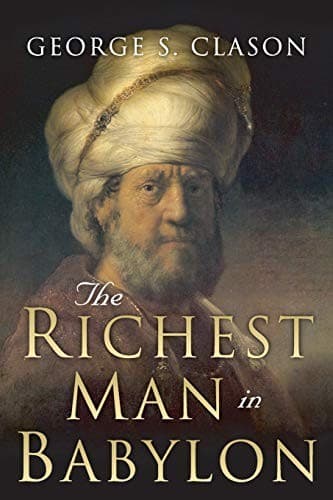
The Richest Man in Babylon
George S. Clason
“Another parable-based money classic that reinforces saving and investing principles.”
Buy on Amazon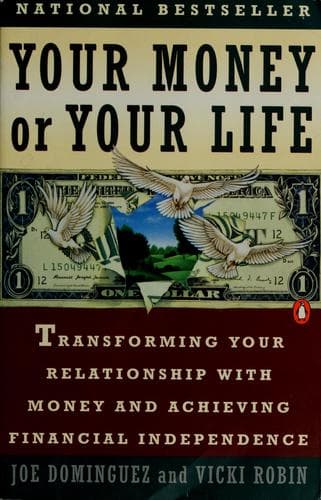
Your Money or Your Life
Vicki Robin
“Helps translate “financial freedom” into a values + numbers plan.”
Buy on Amazon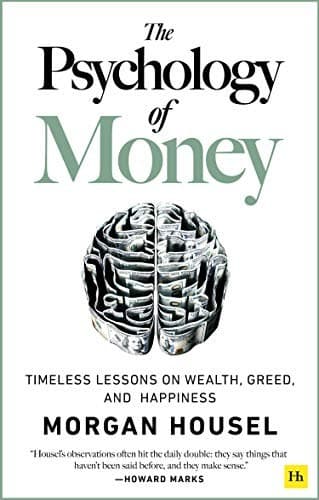
The Psychology of Money
Morgan Housel
“Modern, story-driven lessons on behavior and risk—often recommended alongside it.”
Buy on AmazonGo Deeper
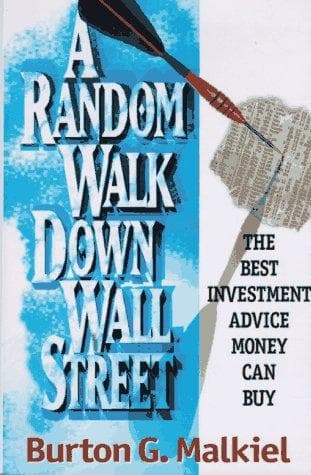
A Random Walk Down Wall Street
Burton G. Malkiel
“Evidence-based investing and market fundamentals to replace guru narratives.”
Buy on Amazon
The Bogleheads’ Guide to Investing
Taylor Larimore
“Concrete index-fund playbook, fees, diversification, and long-term discipline.”
Buy on Amazon
The Intelligent Investor
Benjamin Graham
“Classic deep investing framework if you want rigor beyond mindset.”
Buy on AmazonWhat Readers Ask
It’s a parable-style argument for financial education: prioritize buying cash-flowing assets, understand the difference between assets and liabilities, and build income streams beyond a salary. Readers cite the mindset reset as the main value more than any step-by-step plan.
Readers most often use it as a mindset primer: it reframes how to think about money, income, and ownership. The main caveat from the community is to supplement it with more rigorous, numbers-first personal finance advice.
The Culture
In the Wild
Critics & Podcasts
- Wikipedia — A perennial bestselling personal finance book framed as lessons from two father figures; frequently criticized for factual accuracy and for promoting seminars.
- Goodreads — Highly rated by many readers for mindset shift, but reviews are polarized between inspiration and “too vague”.
- r/personalfinance discussions — Often recommended as motivation, but many commenters prefer more concrete, evidence-based personal finance books.
What Kind of Book Is This?
Community Tags

Robert T. Kiyosaki
Author Credibility
American businessman and author best known for the Rich Dad Poor Dad series, which popularized “assets vs. liabilities” and cashflow-first thinking for mainstream readers.
Community Trust: Mixed. The crowd tends to trust the book as a motivational gateway and likes the simple mental models, but frequently questions the author’s credibility and criticizes the surrounding seminar/upsell ecosystem. Net: useful ideas, but many readers recommend verifying claims and supplementing with more rigorous personal finance sources.
How to Read This
Best as: Audiobook or Paperback
Most readers treat it as a fast mindset primer; audio works well because the value is in the stories and repeated concepts.
Shelf Life
Re-read every few years
The concepts stick, but many people revisit it mainly to reset their “assets/cashflow” lens.
Homework Level
Light
No worksheets required, but it nudges you to list assets/liabilities and learn basic statements.
Best Life Stage
Early money journey / reset moment
Best when you’re starting to take money seriously or questioning the salary-only path.
The mindset holds up; the specifics are debated
For a decades-old bestseller, most agree the motivational message still lands. The debate is about details and credibility: critics argue some claims and examples don’t translate cleanly to today’s markets, while supporters say you’re supposed to learn the principle, not copy the tactics.
Signals “I want out of the paycheck loop”
Recommending it often signals you’re interested in entrepreneurship, real estate, and building income streams—sometimes with a contrarian “schools don’t teach money” vibe. In some circles it’s seen as a rite-of-passage finance book; in others, as a red flag for guru culture.
A lot of people feel the ecosystem is the product
A recurring complaint is that the book functions like the top of a funnel for seminars, courses, and branded products. Even fans often recommend reading it for the mindset, then avoiding expensive upsells and finding grounded resources for execution.
The “asset vs. liability” rule is a heuristic, not accounting law
Readers often repeat the book’s definitions as absolute truth. In discussions, others point out that real accounting and personal context matter (e.g., a home can be both a consumption choice and a long-term financial decision). Treat it as a behavior-shaping lens, then do the math for your situation.