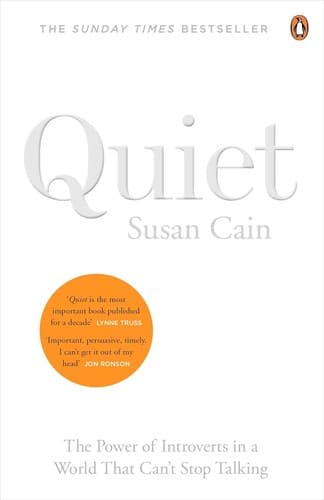
A modern manifesto for introverts — praised for validating quiet strengths and critiquing the ‘extrovert ideal,’ but sometimes criticized for overgeneralizing introversion.
Why It's Popular Right Now
It gave a mainstream, research-backed story for what many people felt privately: that quiet is not a flaw. It also named the “extrovert ideal” and connected it to schools, offices, and leadership culture.
Contents
Core Concepts
Quiet argues that modern culture over-rewards loudness and group performance, even when solitude and careful thinking produce better ideas. It reframes introversion as a temperament with strengths—when the environment fits.
The “Extrovert Ideal”
A cultural bias that equates sociability and assertiveness with competence and leadership.
Recharging vs Performing
Introversion is about how you respond to stimulation and where you get your energy back—often in quieter settings.
The New Groupthink
Constant brainstorming and open offices can suppress deeper work and quieter voices.
Temperament on a Spectrum
Most people aren't purely introvert/extrovert; context and life stage shift where you land.
Culture Shapes Personality Expression
Different societies reward different traits; the same temperament can thrive or struggle depending on norms.
The Reading Experience
Many readers like it in audio for the narration/interview feel, but the case studies read well in print.
The Honest Take
Curated from 322.4K+ community discussions
Read If
- •You feel drained by constant social demands and want language for what you're experiencing.
- •You're a manager/teammate who wants to draw out quieter people without forcing them to perform.
- •You're curious about how culture rewards extroversion—and what we lose because of it.
- •You want a big-picture framework for introversion, not just a list of tips.
Skip If
- •You already know the introversion basics and want a highly tactical playbook.
- •You dislike broad personality generalizations and want tighter definitions and caveats.
- •You're looking for clinical mental-health guidance rather than cultural/social analysis.
- •You want deep academic personality theory with heavy citations and methods.
What Works
Validation without pity
r/r/books 64“Thanks so much for Quiet, that book really changed how I viewed my introversion. Can't wait to read Bittersweet. I'm excited to hear you do the Audiobook narration this time. How did you find doing it? Difficult? Enjoyable?”
Useful workplace lens
r/r/books 5“Curious if there's any particular experience that led you to write *Bittersweet*? What made you realize you hit on another "a ha" idea that resonates with so many people, like in *Quiet*?”
Spectrum framing
r/r/books 13“Hi Susan. Reader of both your books. You've mentioned you're a big fan of Leonard Cohen. So am I. One of my favorite songs of his is Come Healing. I found many healing "take aways" in Quiet. What are the healing "take aways" readers should look for in Bittersweet?”
What Falls Flat
Can feel reductive
r/r/books 18“What a great list! I'm sorry that you've been having a hard time; I hope these books made good escapism for you. Did any books really affect you emotionally or introspectively? Lonesome Dove and East of Eden are already on my reading list, but I'm definitely moving them up and adding Middlemarch now.”
Not a tactical self-help manual
r/r/books 22“"Quiet" is a great book. Sorry you didn't get more response here.”
Real-Life Impact
“Curious if there's any particular experience that led you to write *Bittersweet*? What made you realize you hit on another "a ha" idea that resonates with so many people, like in *Quiet*?”
“Thanks so much for Quiet, that book really changed how I viewed my introversion. Can't wait to read Bittersweet. I'm excited to hear you do the Audiobook narration this time. How did you find doing it? Difficult? Enjoyable?”
“I don't have a question, I just wanted to say Quiet really changed my outlook on life and I think has had a positive effect on the perception of introversion in our culture. Thank you it has made a huge difference for many people.”
“I just want to say I love your book Quiet and I think it should be required reading for everyone but especially for extroverts. I think so many managers in business miss out on good employees because they are too quiet and they don't want to take the extra time required to get their ideas out of them.”
“There's zero correlation between being the best talker and having the best ideas.”
— Susan Cain
The Quotes
From the Book
“There's zero correlation between being the best talker and having the best ideas.”
“Don't think of introversion as something that needs to be cured.”
“The secret to life is to put yourself in the right lighting. For some it's a Broadway spotlight; for others, a lamplit desk.”
From the Crowd
“Thanks so much for Quiet, that book really changed how I viewed my introversion. Can't wait to read Bittersweet. I'm excited to hear you do the Audiobook narration this time. How did you find doing it? Difficult? Enjoyable?”
r/r/books 64“"Quiet" is a great book. Sorry you didn't get more response here.”
r/r/books 22“Hi Susan. Reader of both your books. You've mentioned you're a big fan of Leonard Cohen. So am I. One of my favorite songs of his is Come Healing. I found many healing "take aways" in Quiet. What are the healing "take aways" readers should look for in Bittersweet?”
r/r/books 13“I don't have a question, I just wanted to say Quiet really changed my outlook on life and I think has had a positive effect on the perception of introversion in our culture. Thank you it has made a huge difference for many people.”
r/r/books 13“I just want to say I love your book Quiet and I think it should be required reading for everyone but especially for extroverts. I think so many managers in business miss out on good employees because they are too quiet and they don't want to take the extra time required to get their ideas out of them.”
r/r/books 6“Curious if there's any particular experience that led you to write *Bittersweet*? What made you realize you hit on another "a ha" idea that resonates with so many people, like in *Quiet*?”
r/r/books 5The Crowd Splits: The Debate
While generally beloved, the community is divided on the book's depth and originality.
Does the book overgeneralize introverts vs. extroverts?
Is it more cultural critique than practical guidance?
The Bookshelf
Read Instead
The Introvert Advantage
Marti Olsen Laney
“More practical guidance for thriving as an introvert day-to-day.”
Buy on Amazon
Personality
Daniel Nettle
“A tighter psychology lens on traits without a culture-war framing.”
Buy on Amazon
The Charisma Myth
Olivia Fox Cabane
“If your goal is social presence skills, this is more tactical.”
Buy on AmazonRead Next

Bittersweet
Susan Cain
“Cain's follow-up on sadness, longing, and meaning—many Quiet fans go here next.”
Buy on Amazon
Quiet Power
Susan Cain
“A younger-reader adaptation that keeps the core ideas, faster.”
Buy on Amazon
Grit
Angela Duckworth
“If you liked the research-backed narrative style, this scratches a similar itch.”
Buy on AmazonGo Deeper
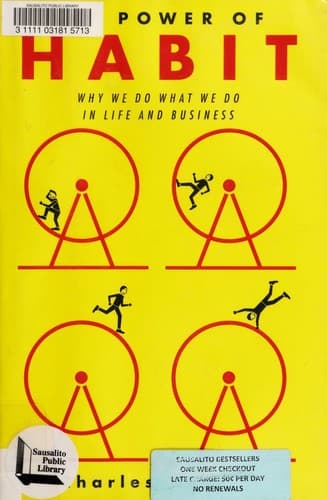
The Power of Habit
Charles Duhigg
“For behavior-change mechanics that many readers apply to social routines too.”
Buy on Amazon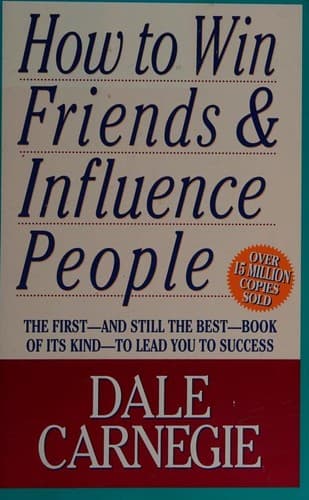
How to Win Friends and Influence People
Dale Carnegie
“A classic counterpoint: social skill-building from a different era of the extrovert ideal.”
Buy on Amazon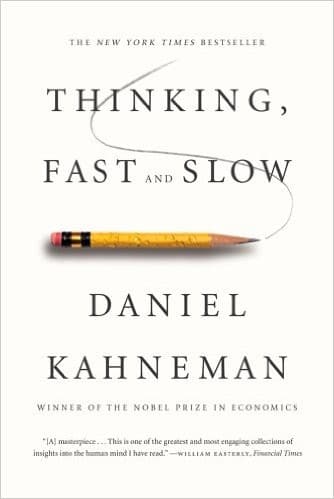
Thinking, Fast and Slow
Daniel Kahneman
“If you want the underlying cognitive science rigor.”
Buy on AmazonWhat Readers Ask
It’s a research-backed argument that modern culture over-rewards loudness and group performance, and that introverts thrive when their environment fits their temperament. The book reframes introversion as a strength—not a defect to fix.
Name the “extrovert ideal,” treat stimulation as a variable you can design around, and stop confusing introversion with shyness. Many readers take away practical boundary moves: fewer performative meetings, more prep time, and quieter ways to contribute.
The Culture
In the Wild
Critics & Podcasts
- TED — Susan Cain's TED Talk expanded the book's core argument and drove mainstream awareness of introversion.
- NPR / interviews — Recurring interviews frame the book as a cultural critique of leadership, schools, and open-office norms.
- Workplace/management podcasts — Often cited in conversations about meetings, brainstorming, and how to get quieter voices heard.
What Kind of Book Is This?
Community Tags
Susan Cain
Author Credibility
Susan Cain is an author and speaker best known for popularizing the modern conversation about introversion and the “extrovert ideal.” She has a background in law and has written widely on temperament, work culture, and belonging.
Community Trust: High. Readers generally treat Cain as credible because the book is research-forward and careful in tone, and because many recognize their lived experience in the workplace and school examples. The main pushback is about overgeneralization (introvert/extrovert as boxes), not about bad faith.
How to Read This
Best as: Paperback or Audiobook
Many readers like it in audio for the narration/interview feel, but the case studies read well in print.
Shelf Life
Re-read every few years
Works best as a “reset” when life or work gets too noisy.
Homework Level
Low
More reflection and boundary-setting than worksheets.
Best Life Stage
Career-building + identity shifts
Especially helpful when you're navigating office culture, networking pressure, or leadership expectations.
Has it aged well?
Many feel the workplace critique (open-office, constant meetings) has aged even better post-remote/hybrid—while some say the introvert/extrovert framing still risks over-simplifying personality.
crowd consensus
What does reading this say about me?
You're signaling you value depth, reflection, and doing good work without constant performance. Many readers treat it as a way to justify preferring calm over charisma.
crowd consensus
What do people get wrong?
Introversion isn't shyness, antisocial behavior, or a fixed box; it's mostly about where you recharge. Readers also argue the book can be misread as “introverts are better,” when it's really about fit and balance.
crowd consensus