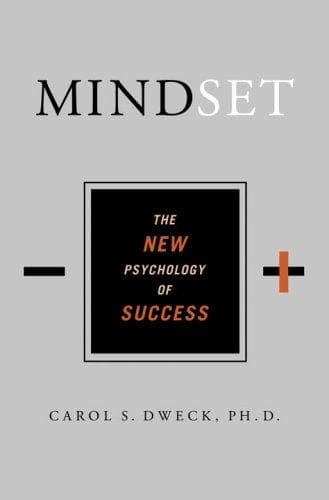
A sticky lens for reframing failure and effort—hugely influential, but often over-simplified into a slogan.
Why It's Popular Right Now
Mindset broke out because it gives a simple, teachable explanation for why talented people stall: they protect identity instead of practicing. It also spread through schools and coaching culture, turning ‘growth mindset’ into a mainstream term.
Contents
Core Concepts
Mindset’s core claim is that beliefs about ability quietly shape behavior: if you think traits are fixed, you avoid failure and protect identity; if you think skills can be developed, you seek feedback, practice longer, and recover faster.
Fixed vs Growth
Two default beliefs about ability: static talent versus developable skill.
Identity vs Learning Goals
Fixed mindset chases proof; growth mindset chases progress.
Process Praise
Praise effort/strategy/improvement rather than "you’re smart" traits.
Failure as Data
Treat mistakes as information for the next attempt, not a verdict.
Mindset in Systems
Classrooms, teams, and families can reinforce one mindset through incentives and feedback.
The Reading Experience
Works well in audio, but the education/business examples land best if you pause and map them to your own patterns.
The Honest Take
Curated from 12.0K+ community discussions
Read If
- •You shut down when you’re not instantly good at something—and you want a new way to interpret struggle.
- •You’re a parent/teacher/coach trying to praise effort and process without creating ‘smart kid’ fragility.
- •You want a simple mental model you can apply in school, work, sports, or learning a skill.
- •You’ve been avoiding a challenge because failure feels like a verdict on you.
Skip If
- •You’ve already internalized growth-mindset ideas and want a newer, more technical performance framework.
- •You’re allergic to pop-psych terms that get turned into corporate/school slogans.
- •You’re looking for a step-by-step habit system (this is more lens than checklist).
- •You want rigorous, replicable intervention evidence more than an explanatory narrative.
What Works
Reframes failure from identity threat to information
r/selfimprovement 52“It sounds like part of what you’re describing is growth mindset vs. fixed mindset, which was popularized by a psychologist named Carol Dweck. She wrote a very good book about this called, appropriately, Mindset.”
Makes parenting/teaching praise immediately more effective
r/LifeProTips 65“This this this. Build a growth mindset in your child vs a fixed mindset. It can make all the difference in their life path.”
Gives a shared language for coaching and classrooms
r/getdisciplined 8“I also incorporate growth mindset as an Algebra 1 teacher in one of the lowest performing districts in the nation. Progress not perfection (I’m also a recovering alcoholic) is my mantra.”
What Falls Flat
Over-promises what quick interventions can do
r/psychology 14“The growth mindset theory has over promised and under delivered. Based on my own review, the effect does seem to real, but small.”
Term gets distorted into a slogan
r/psychology 31“I don't understand why the inaccurate term "growth mindset" gets used so often in this context. Dweck argues against it and originally presented mutable vs. fixed self-theory which is much more accurate.”
Real-Life Impact
“It'll be interesting to see what kids are like in 10-15 years. For the past few years, schools across the country have adopted Dweck's "Growth Mindset" theory and have been using it in classrooms on a daily basis.”
“I also incorporate growth mindset as an Algebra 1 teacher in one of the lowest performing districts in the nation. Progress not perfection (I’m also a recovering alcoholic) is my mantra.”
“Thank you so much for sharing this. I recently came to the same conclusion about how I was raised after reading “Mindset” by Carole Dweck and realized I had been doing the same with my oldest son. I began to apologize to him for telling him he was “smart”.”
“For a minute, I thought I was reading about myself. ... as I grew up, I started to fail in my subjects and I was still adamant about studying science because I believed I was smart. ... it affected my mental health.”
“Becoming is better than being.”
— Carol S. Dweck
The Quotes
From the Book
“Becoming is better than being.”
“Why waste time proving over and over how great you are, when you could be getting better?”
“In the growth mindset, failure is not a permanent condition. It is a problem to be faced, dealt with, and learned from.”
“No matter what your ability is, effort is what ignites that ability and turns it into accomplishment.”
From the Crowd
“It sounds like part of what you’re describing is growth mindset vs. fixed mindset, which was popularized by a psychologist named Carol Dweck. She wrote a very good book about this called, appropriately, Mindset.”
r/selfimprovement 52“The growth mindset theory has over promised and under delivered. Based on my own review, the effect does seem to real, but small.”
r/psychology 14“I don't understand why the inaccurate term "growth mindset" gets used so often in this context. Dweck argues against it and originally presented mutable vs. fixed self-theory.”
r/psychology 31“Thank you so much for sharing this. I recently came to the same conclusion about how I was raised after reading “Mindset” by Carole Dweck and realized I had been doing the same with my oldest son.”
r/selfimprovement 3“It'll be interesting to see what kids are like in 10-15 years. For the past few years, schools across the country have adopted Dweck's "Growth Mindset" theory and have been using it in classrooms on a daily basis.”
r/getdisciplined 83The Crowd Splits: The Debate
While generally beloved, the community is divided on the book's depth and originality.
Is ‘growth mindset’ a practical tool, or an over-promised buzzword?
Is the concept best framed as ‘growth mindset’, or is that term misleading?
The Bookshelf
Read Instead
Grit
Angela Duckworth
“More personality-and-performance focused; complements Mindset with persistence research.”
Buy on Amazon
Drive
Daniel H. Pink
“If motivation is your pain point, Drive explains autonomy/mastery/purpose and how incentives backfire.”
Buy on Amazon
Peak
Anders Ericsson
“Turns ‘you can get better’ into a concrete training method (deliberate practice).”
Buy on AmazonRead Next
Atomic Habits
James Clear
“If Mindset shifts your beliefs, Atomic Habits gives you systems to turn that belief into behavior.”
Buy on Amazon
The Power of Habit
Charles Duhigg
“More narrative + science on cue-routine-reward; good if you want mechanisms.”
Buy on Amazon
So Good They Can't Ignore You
Cal Newport
“A growth-mindset adjacent argument: skills and career ‘passion’ come from building rare & valuable ability.”
Buy on AmazonGo Deeper
The Talent Code
Daniel Coyle
“Explores how skill is built (practice, coaching, environment) with a strong ‘development’ lens.”
Buy on Amazon
Outliers
Malcolm Gladwell
“Useful counterweight: highlights opportunity, context, and systems—not just individual effort.”
Buy on Amazon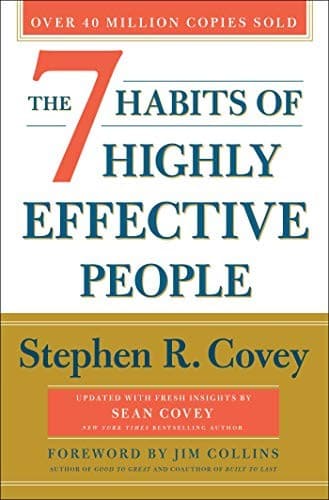
The 7 Habits of Highly Effective People
Stephen R. Covey
“A broader values-and-principles framework for personal effectiveness.”
Buy on AmazonWhat Readers Ask
If you want a clean, memorable lens for why people avoid challenges and interpret failure as identity, yes. Readers tend to get the most value when they treat it as a perspective shift (how you frame effort and mistakes), not a step-by-step program.
It contrasts two patterns of belief about ability: fixed ("talent is set") versus growth ("skills can be developed"). The book shows how those beliefs influence learning, resilience, and how praise, feedback, and environments can push people toward one mindset or the other.
The Culture
In the Wild
Critics & Podcasts
- Wikipedia — Dweck’s "mindset" framework became a major influence in education and business; it popularized fixed vs growth beliefs about ability.
- Reddit (r/psychology) — Some commenters argue the "growth mindset" label is inaccurate and that the intervention effects are often small or context-dependent.
- Google Books (Random House edition) — Positions Mindset as a broad lens across domains (school, sports, business, relationships) with an emphasis on how praise and failure interpretation shape outcomes.
What Kind of Book Is This?
Community Tags

Carol S. Dweck
Author Credibility
Carol S. Dweck is an American psychologist known for research on motivation and the idea of fixed vs growth mindsets. She is a professor of psychology at Stanford University and her work has strongly influenced education and performance culture.
Community Trust: Mixed. The author is broadly respected as a legitimate academic and the core idea is widely adopted, especially in teaching/parenting contexts. At the same time, discussions (particularly in psychology-focused threads) note replication and effect-size concerns and complain that "growth mindset" is often mis-framed or turned into a buzzword intervention. Net: credible researcher, but popular usage overstates certainty and impact.
How to Read This
Best as: Paperback or audiobook
Works well in audio, but the education/business examples land best if you pause and map them to your own patterns.
Shelf Life
Re-read every couple of years
It’s a lens; revisiting after a new challenge (job, sport, skill) makes different examples click.
Homework Level
Light
No heavy worksheets. The "homework" is noticing your self-talk and switching from proving to improving.
Best Life Stage
Learning something hard
Best when you’re starting a new skill, rebuilding confidence, or coaching/parenting someone else.
Has it aged well?
The framework still shows up everywhere (schools, sports, startups). What’s changed is the pushback: people are more aware of "growth mindset" as a buzzword and more skeptical of quick-fix workshops.
editorial
Is it scientifically solid?
The underlying idea (beliefs shape motivation and learning behavior) is widely accepted, but the size and reliability of mindset-intervention effects are debated. Some discussions point to small or hard-to-replicate effects when interventions are shallow or context is ignored.
What does reading this say about you?
You’re trying to trade "talent talk" for "practice talk"—someone who wants to learn in public, take feedback, and not let failure define you.
editorial
What do people get wrong?
People often treat "growth mindset" as forced positivity or a pep talk. The stronger version is behavioral: you can’t always control outcomes, but you can control practice, strategy, and response to feedback—and environments still matter.
editorial