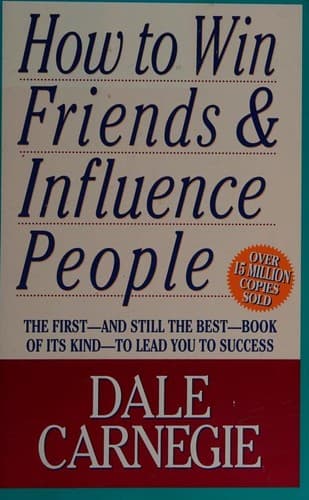
The classic playbook for interpersonal skills—praised as timeless, practical advice, but sometimes criticized as dated or “salesy.”
Why It's Popular Right Now
A classic that functions like a starter manual for human interaction—easy to read, immediately usable, and endlessly quotable. It’s been recommended for decades across sales, leadership, and general self-improvement.
Contents
Core Concepts
The book argues that influence comes from empathy, respect, and making other people feel important—not from winning arguments. It teaches repeatable behaviors for listening, appreciation, and persuasion.
Don’t win arguments—avoid ego battles
Criticizing or proving someone wrong creates resistance; de-escalate and seek understanding.
Listen deeply
Ask questions, encourage others to talk, and reflect back what you heard.
Remember names and personal details
Small signals of attention build rapport disproportionately.
Give sincere appreciation
Praise specific behaviors honestly; people respond to feeling valued.
Appeal to people’s interests
Frame requests in terms of what the other person wants and cares about.
The Reading Experience
Many readers treat it as a skills manual—easy to re-listen or re-skim and practice one principle at a time.
The Honest Take
Curated from 147.7K+ community discussions
Read If
- •You want practical people-skills you can use at work and in everyday life.
- •You feel awkward in conversations and want a simple playbook.
- •You sell, lead, manage, or interview—and want to be more persuasive without being pushy.
- •You’re rebuilding relationships and want habits for listening, appreciation, and trust.
Skip If
- •You’re looking for modern, research-heavy social psychology.
- •You dislike parables and old-school examples and want a tighter, modern voice.
- •You already practice active listening and want advanced negotiation tactics.
- •You’re allergic to anything that feels like influence or sales framing.
What Works
Practical empathy-first principles
r/starterpacks 990“I owe a lot of my social skills to “How To Win Friends and Influence People”. It really helped me branch out in high school and college...Highly Recommend”
Practical empathy-first principles
r/namenerds 164“I used to work in a supermarket and the mandatory name tags were a common topic of complaints. I had a customer become too friendly with me and he contacted me and another girl (both of us minors) through facebook. Didn’t even have our last name on the tags, just our first names and city we lived/worked in was enough. My sister actually also had her last name on there and got f”
Practical empathy-first principles
r/motivation 155“This is really a great read. I used to be a shy kind of person who would never approach anyone or who had no clue how to begin a convo or keep it going. I am introvert tbh. But after reading this book I was changed. Now I can keep the conversations going, talk to strangers and befriend them. This book was a life hack for me. Moreover, you can use the tips from the book anywhere”
What Falls Flat
Can feel dated or salesy
r/namenerds 493“I'm an old millennial (like *the* oldest, born in 1981) and when my friends and I were the age where we were all working in retail or food service, we all hated customers using our names. It was too familiar and it felt almost...creepy?”
Can feel dated or salesy
r/socialskills 391“I do find myself boring, doesn't matter how many hobbies I have. A few years ago, I had like 5-6 hobbies whereas now I'm active in one local community and that's it. It didn't make me more boring, moving on without these, because in my opinion it's about my personality. I am really reserved and quiet most of the time; having fun with me is nearly impossible when there's no plan”
Real-Life Impact
“I'm not Gen Z, but used to work in retail. I would have hated this. It crosses into a "too familiar" territory.”
“This isn’t a Gen Z thing it’s a retail thing. Making yourself immediately over familiar with a retail worker, waitress, etc after seeing their name badge has always been skeezy.”
“I HATED customers using my name when I worked retail. We wear name tags because they're part of our uniform, and we get reprimanded if we don't, not because we want people to know our names. WAY too familiar for my preferences. You're not my friend, I don't know you, and i don't know your name without reading your credit card, please, stop treating me like you know me. And I'm ”
“I owe a lot of my social skills to “How To Win Friends and Influence People”. It really helped me branch out in high school and college...Highly Recommend”
“I'm an old millennial (like *the* oldest, born in 1981) and when my friends and I were the age where we were all working in retail or food service, we all hated customers using our names. It was too familiar and it felt almost...creepy?”
“I don't miss that time in my life. I was full of existential angst and was having borderline panic attacks. I found a job that I enjoyed (despite being nothing near what I was in school for) and put my head down and worked. I improved my skill set and now in my late 30's am doing quite well and have a happy and stable home life with my wife and child. The endless possibility of”
“How To Win Friends and Influence People”
— Dale Carnegie
The Quotes
From the Book
“How To Win Friends and Influence People”
“something that made them angry”
“I support women’s wrongs”
“I minored in Literature”
“A person's name is to that person, the sweetest, most important **sound** in any language.”
From the Crowd
“This could be anyone into their early 40s. Edit: I don't know and don't care who Jordan Peterson is.”
r/starterpacks 9.6K“I'm not Gen Z, but used to work in retail. I would have hated this. It crosses into a "too familiar" territory.”
r/namenerds 5.3K“Perhaps the upper limit of the age range can be bumped up a bit”
r/starterpacks 4.8K“Am I the only one who’s thinks /r/streetwear doesn’t have nice looking clothes at all? It all has some kind of informal hipster mixed with teenagers vibe to me.”
r/starterpacks 3.6K“This isn’t a Gen Z thing it’s a retail thing. Making yourself immediately over familiar with a retail worker, waitress, etc after seeing their name badge has always been skeezy.”
r/namenerds 3.0K“I got my shit together last semester in college after losing a scholarship. Eating better, going to the gym, sticking to plans, and trying to maintain a good social life has been the best thing that’s happened to me in years. BUT I still fap, porn is causing nothing happiness after a long day”
r/starterpacks 2.0KThe Crowd Splits: The Debate
While generally beloved, the community is divided on the book's depth and originality.
Is it timeless social skill advice or old-fashioned manipulation?
Should you read the original or a modern summary / updated version?
The Bookshelf
Read Instead
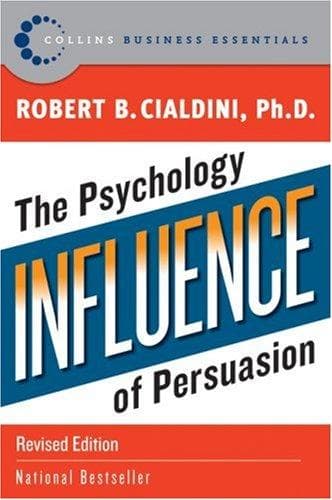
Influence
Robert B. Cialdini
“More research-backed persuasion psychology; less parable-driven.”
Buy on Amazon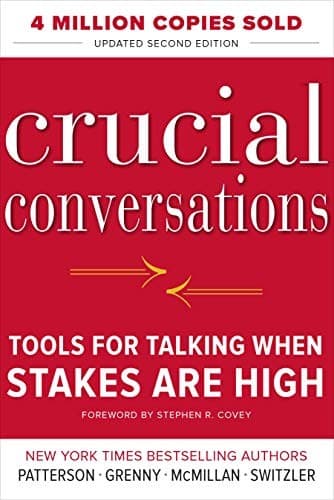
Crucial Conversations
Kerry Patterson
“Modern playbook for high-stakes conversations and conflict.”
Buy on Amazon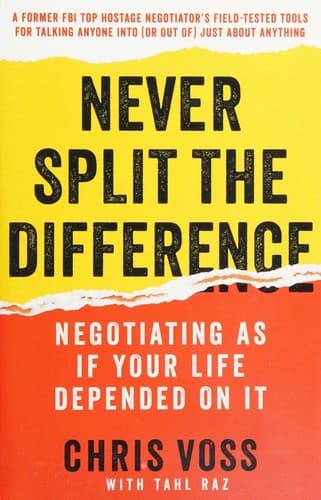
Never Split the Difference
Chris Voss
“If you want tactical negotiation tools and language patterns.”
Buy on AmazonRead Next
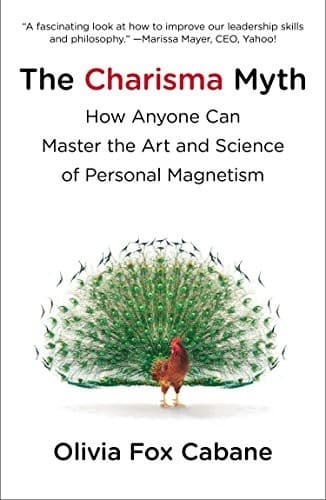
The Charisma Myth
Olivia Fox Cabane
“A modern, skill-based approach to presence and likeability.”
Buy on Amazon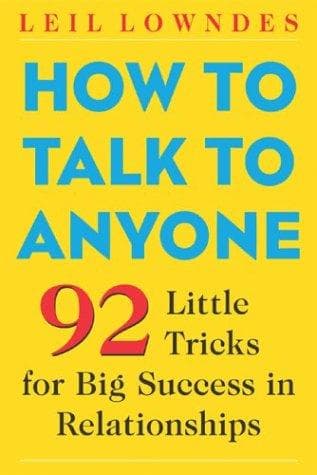
How to Talk to Anyone
Leil Lowndes
“More tips-and-tricks social skills with specific scenarios.”
Buy on Amazon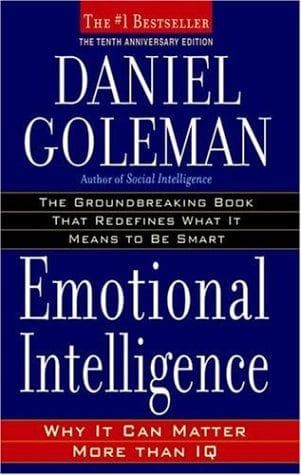
Emotional Intelligence
Daniel Goleman
“Broader EQ foundation behind empathy and social awareness.”
Buy on AmazonGo Deeper
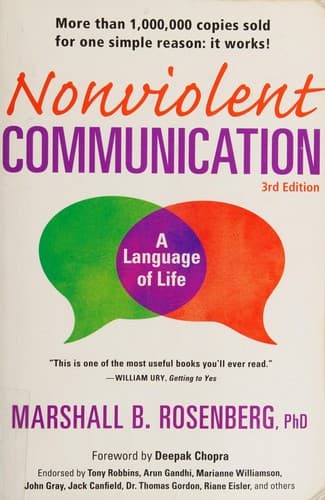
Nonviolent Communication
Marshall B. Rosenberg
“Deepens the empathy + needs-based communication angle.”
Buy on Amazon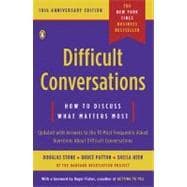
Difficult Conversations
Douglas Stone
“A structured framework for tough relationship/work talks.”
Buy on Amazon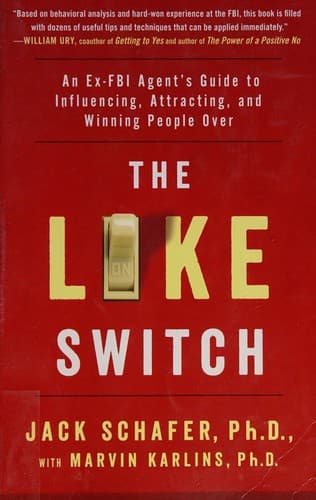
The Like Switch
Jack Schafer
“Rapport-building techniques with a more modern lens.”
Buy on AmazonWhat Readers Ask
The book is organized as sets of principles (often summarized as ‘ways to handle people,’ ‘ways to make people like you,’ and ‘ways to win people to your way of thinking’). Readers usually treat it as a checklist and practice one principle per week. If you’re using it at work, focus on the parts about avoiding blame and giving credit; those show up repeatedly in reader anecdotes.
Most readers use this as a foundational communication book: simple principles, story-driven, and best when you apply one idea at a time in real conversations. The title overpromises; the content is more about kindness and cooperation than “influence tactics.”
The Culture
In the Wild
Critics & Podcasts
- How to Win Friends and Influence People by Dale Carnegie — A review/discussion of the book and its key principles.
- How to Win Friends and Influence People Book Review — A review/discussion of the book and its key principles.
- How to Win Friends and Influence People by Dale Carnegie — A review/discussion of the book and its key principles.
- How to Win Friends & Influence People by Dale Carnegie — A review/discussion of the book and its key principles.
- Book Review — How To Win Friends And Influence People — A review/discussion of the book and its key principles.
What Kind of Book Is This?
Community Tags

Dale Carnegie
Author Credibility
American writer and lecturer who developed popular courses in self-improvement, salesmanship, corporate training, and interpersonal skills. Best known for How to Win Friends and Influence People (1936).
Community Trust: High. Readers tend to trust Carnegie less for “science” and more for timeless human observation: listening, appreciation, and avoiding ego battles. Criticism focuses on the age of examples and the risk of using the advice as manipulation.
How to Read This
Best as: Audiobook or Paperback
Many readers treat it as a skills manual—easy to re-listen or re-skim and practice one principle at a time.
Shelf Life
Re-read every few years
It’s short enough to revisit; the reminders help keep your default social habits from drifting.
Homework Level
Light but real
The “homework” is social: try one rule per week in real conversations.
Best Life Stage
Any stage, especially early career
Most useful when you’re learning to navigate coworkers, managers, clients, and new relationships.
Has it aged well?
The stories and examples are old-fashioned, but readers routinely say the underlying psychology—validation, empathy, avoiding ego battles—still applies.
crowd consensus
Can it be weaponized?
Yes—used cynically, it can become ‘rapport hacks.’ Most community advice: use it to understand people and de-escalate, not to win at any cost.
crowd consensus
What does reading this say about you?
You’re trying to get better at people: listening, diplomacy, and influence without force. In many circles it reads as “classic self-improvement” with a slight sales/leadership vibe.
crowd consensus
Is there an upsell ecosystem?
Beyond the book, the Carnegie name is attached to paid training/courses; some readers see that as a brand machine, others as a legitimate skills program.
editorial
What do people get wrong?
The principles aren’t meant to be a script to “work” people. The most positive readers emphasize sincerity—if you fake interest or praise, it backfires.
crowd consensus