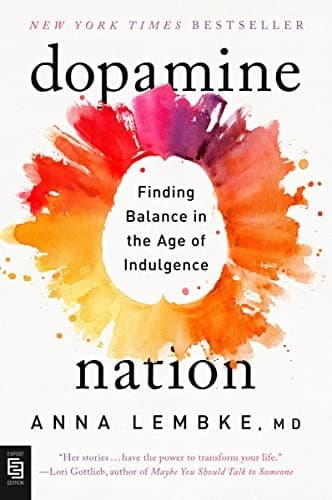
A clinician-led look at our “too-much-of-a-good-thing” era: memorable case stories and a usable reset frame, but readers debate how rigorous the dopamine science is.
Why It's Popular Right Now
It hit a nerve in the “always-on” era: people recognized their own compulsions (especially digital) and wanted a clinician’s explanation for why pleasure stops feeling good.
Contents
Core Concepts
Too much easy reward can push the brain toward craving and numbness; the fix is not more hacks but rebalancing pleasure and pain with abstinence, friction, and healthier reward sources.
Pleasure/Pain Balance
Chasing pleasure repeatedly can tilt you toward pain (tolerance, craving, withdrawal).
The “More” Loop
High-reward stimuli train the brain to want more intensity and frequency.
Reset via Abstinence
Temporarily removing the trigger to let baseline return—then reintroducing intentionally.
Friction is a Feature
Make harmful rewards harder to access; make healthy ones easier.
Community + Accountability
Social support reduces relapse and helps sustain behavior change.
The Reading Experience
The case stories flow well in audio, but the key takeaway is to pause and apply the friction/reset ideas.
The Honest Take
Curated from 25.9K+ community discussions
Read If
- •You feel stuck in compulsive loops (phone, porn, food, shopping) and want a clean reset frame
- •You like psychology explained through real clinic stories—not just tips
- •You want language for why "just one more" keeps happening
- •You’re looking for a conversation starter about pleasure, pain, and modern overload
Skip If
- •You’re looking for a step-by-step daily program with worksheets in every chapter
- •You’re sensitive to explicit addiction case stories and prefer a drier research tone
- •You want a strictly academic neuroscience text with citations and nuance on every claim
- •You already have a solid digital-minimalism practice and want only advanced tactics
What Works
Story-driven clarity
r/Professors 52“Reading this synopsis, I was thinking of "trigger stacking," which I know of mainly from dog training -- the idea that each painful or frustrating stimulus stacks on top of and magnifies the previous one, resulting eventually in an overwhelmed outburst. There are a lot more painful stimuli for some of us now than there were before the pandemic. Maybe some students are overre...”
Digital habit wake-up call
r/Professors 22“Here’s a thought I have - do they learn through wise counsel? Or through hard experience? Perhaps I’m channeling some of my Outward Bound background (To Serve! To Strive! Not to Yield!) and all that character building stuff from Scouting and 4H, but one of the things Dr. Lembke stated was that addicted people didn’t change “until they faced hard consequences.” As college has...”
Reset framing (weeks, not hours)
r/slatestarcodex 18“As an aside, I read the first chapter of the book and threw it against the wall -- okay, not really -- but was sort of disappointed in its weirdly detailed focus on one male patient's masturbation machine (and the related focus on the author's own former erotica addiction, which may be why she zeroed in so much of her writing on some poor guy's masturbation machine?) as a wa...”
What Falls Flat
Feels sensational / too explicit for some
r/slatestarcodex 18“As an aside, I read the first chapter of the book and threw it against the wall -- okay, not really -- but was sort of disappointed in its weirdly detailed focus on one male patient's masturbation machine (and the related focus on the author's own former erotica addiction, which may be why she zeroed in so much of her writing on some poor guy's masturbation machine?) as a wa...”
Dopamine as a catch-all explanation
r/adhdwomen 2“Not scientific? > Anna Lembke (born November 27, 1967) is an American psychiatrist who is Chief of the Stanford Addiction Medicine Dual Diagnosis Clinic at Stanford University I don't see how it gets more scientific than that.”
Real-Life Impact
“Here’s a thought I have - do they learn through wise counsel? Or through hard experience? Perhaps I’m channeling some of my Outward Bound background (To Serve! To Strive! Not to Yield!) and all that character building stuff from Scouting and 4H, but one of the things Dr. Lembke stated was that addicted people didn’t change “until they faced hard consequences.” As college has...”
“As Russel Barkley says, ADHD is just a low end of a statistical distribution regarding executive functions. It's a question of degree, nothing is fundamentally different. Everyone has problems with rewards seeking and everyone needs to work on it. Of course it's more difficult for ADHD people, but on the other hand - their suffering increases their determination - stakes are...”
“The problem is while this is just a book people like her have been given way too much influence on opioid prescribing. I have noticed she likes to generalize and or over-exaggerate her talking points. She makes good points like the teenager that came to her with anxiety but chronically uses marijuana. She suggests the teen stop using marijuana and reassess. But then she goes...”
“I am always leery of podcasts that bring on academics to discuss their popular science works. I often find that when they discuss my own field, they are way off base. I don't doubt that Lembke has found significant evidence that smartphones are addictive, but I don't buy the argument as presented here. A lot of the social issues that have come to a head in recent years are t...”
““Abstinence is the best way to reset a dopamine reward pathway.””
— Anna Lembke
The Quotes
From the Book
““Abstinence is the best way to reset a dopamine reward pathway.””
““The pursuit of pleasure, about which we have been instructed since birth, is now also a source of pain.””
““Dopamine is the molecule of more.””
From the Crowd
“Reading this synopsis, I was thinking of "trigger stacking," which I know of mainly from dog training -- the idea that each painful or frustrating stimulus stacks on top of and magnifies the previous one, resulting eventually in an overwhelmed outburst. There are a lot more painful stimuli for some of us now than there were before the pandemic. Maybe some students are overre...”
r/Professors 52“Here’s a thought I have - do they learn through wise counsel? Or through hard experience? Perhaps I’m channeling some of my Outward Bound background (To Serve! To Strive! Not to Yield!) and all that character building stuff from Scouting and 4H, but one of the things Dr. Lembke stated was that addicted people didn’t change “until they faced hard consequences.” As college has...”
r/Professors 22“As an aside, I read the first chapter of the book and threw it against the wall -- okay, not really -- but was sort of disappointed in its weirdly detailed focus on one male patient's masturbation machine (and the related focus on the author's own former erotica addiction, which may be why she zeroed in so much of her writing on some poor guy's masturbation machine?) as a wa...”
r/slatestarcodex 18“I am always leery of podcasts that bring on academics to discuss their popular science works. I often find that when they discuss my own field, they are way off base. I don't doubt that Lembke has found significant evidence that smartphones are addictive, but I don't buy the argument as presented here. A lot of the social issues that have come to a head in recent years are t...”
r/Professors 18“Here's her [Stanford profile](https://med.stanford.edu/profiles/anna-lembke) And this is her research [publication list](https://www.researchgate.net/profile/Anna-Lembke)”
r/Neuropsychology 10The Crowd Splits: The Debate
While generally beloved, the community is divided on the book's depth and originality.
Is the book a practical reset plan, or mostly pop-science storytelling?
Do the explicit patient stories help, or feel sensational?
The Bookshelf
Read Instead
Digital Minimalism
Cal Newport
“More of a concrete philosophy + practical rules for reclaiming attention from tech.”
Buy on Amazon
The Power of Habit
Charles Duhigg
“More classic habit-loop reporting with plenty of examples; less “dopamine” framing.”
Buy on Amazon
Indistractable
Nir Eyal
“More tactical: triggers, timeboxing, and environment design for distraction.”
Buy on AmazonRead Next
Atomic Habits
James Clear
“If you want the most actionable systems to replace the bad loops with good ones.”
Buy on Amazon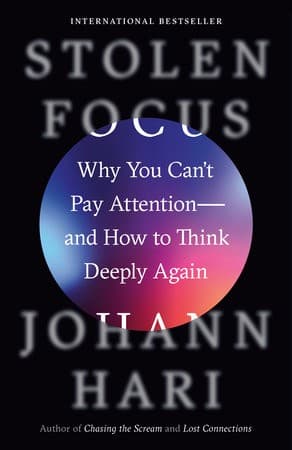
Stolen Focus
Johann Hari
“Zooms out to the societal drivers of attention collapse and what to do about it.”
Buy on Amazon
Dopamine Nation Workbook
Anna Lembke
“If you want the ideas translated into prompts and exercises.”
Buy on AmazonGo Deeper

Dopamine
Daniel Z. Lieberman & Michael E. Long
“A deeper popular-science tour of dopamine and desire (“the molecule of more”).”
Buy on Amazon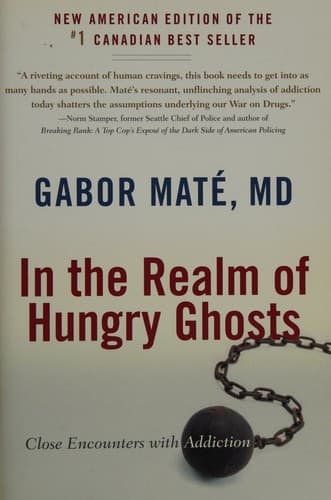
In the Realm of Hungry Ghosts
Gabor Maté
“A more trauma-informed, humanistic lens on addiction beyond neurochemistry.”
Buy on Amazon
The Craving Mind
Judson Brewer
“Habit loops + craving from a clinician-researcher with mindfulness-based tools.”
Buy on AmazonWhat Readers Ask
The book argues (1) we live in an era of effortless, high-reward stimulation, (2) repeated indulgence breeds tolerance and craving, and (3) the way back is rebalancing pleasure/pain with abstinence, friction, and community. Readers mostly agree on the framing, while debating how cleanly dopamine explains every behavior.
A 7-day plan is usually internet folklore; the book pushes longer timelines and clearer rules. If you only have a week, treat it as a “proof of concept”: remove the top trigger, add friction, and use the week to set up a sustainable baseline plan.
The Culture
In the Wild
Critics & Podcasts
- Stanford Profiles — Establishes Lembke’s clinical role (Stanford addiction medicine) which boosts credibility for many readers.
- Wikipedia — Quick background and bibliography reference point; useful for basic facts.
- Official site — Talks and resources connected to the book; signals there’s an ecosystem around the thesis.
What Kind of Book Is This?
Community Tags
Anna Lembke
Author Credibility
Stanford addiction psychiatrist and Chief of the Stanford Addiction Medicine Dual Diagnosis Clinic. She writes and speaks about addiction, compulsive behavior, and behavioral change in a high-stimulation world.
Community Trust: High. Most readers trust her because she is a practicing addiction psychiatrist affiliated with Stanford. The pushback is less about her credentials and more about whether the book’s dopamine framing oversimplifies complex behavior.
How to Read This
Best as: Audiobook or Paperback
The case stories flow well in audio, but the key takeaway is to pause and apply the friction/reset ideas.
Shelf Life
Re-read when your habits slip
Most useful as a periodic reset: revisit when you notice compulsive loops returning.
Homework Level
Moderate
You’ll get more out of it if you pick one stimulus to reduce and track a multi-week reset.
Best Life Stage
When you feel overstimulated or compulsive
Ideal when you suspect “too much easy reward” is flattening motivation and mood.
Is the dopamine science solid?
Readers debate how neatly dopamine explains complex behavior; fans treat it as a useful model, critics want more nuance and citations.
Reddit discussion
What genre is it really?
Part self-help, part pop neuroscience, part clinical storytelling about addiction and modern overconsumption.
editorial
What does reading this say about you?
You’re trying to get honest about your compulsions (especially digital ones) and you want a clinician’s lens—not just productivity hacks.
editorial
Is there an upsell ecosystem?
Beyond the book, there are talks, interviews, and a workbook; some readers are fine with it, others prefer the ideas without the brand layer.
editorial
What do people get wrong?
Many people reduce it to a “dopamine detox” hack, but the book is more about sustained behavior change, friction, and rebalancing pleasure/pain—not a weekend cleanse.
crowd consensus